
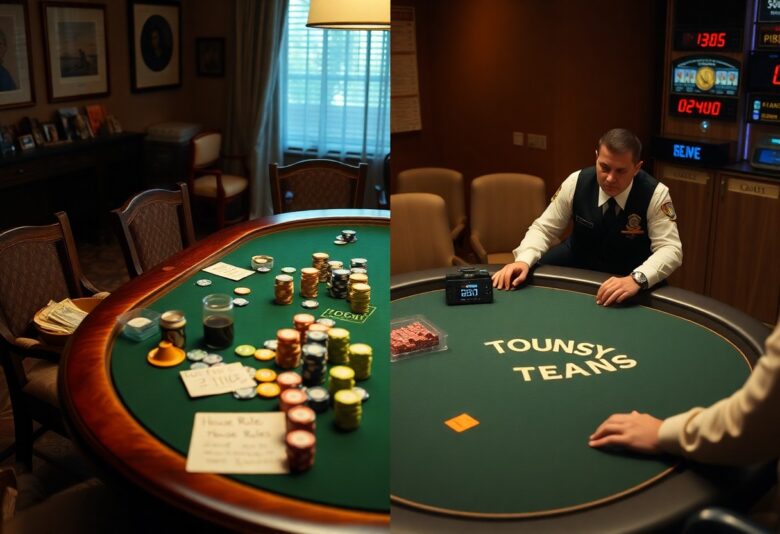
Just because the card mechanics are the same, casual games and tournaments demand different approaches: casual play favors flexible buy-ins, real-money exchange and relaxed etiquette, while tournaments use fixed entries, escalating blinds, structured levels, and single-elimination pressure that can be dangerous to your bankroll. Strategy shifts from long-term stack management in cash games to survival and chip accumulation in tournaments; understand rebuys, prize distribution and time controls to avoid costly mistakes and exploit opportunities.
Types of Poker
Across rooms and home tables, play splits into distinct games: Texas Hold’em dominates tournaments, Omaha brings higher variance with four hole cards, Seven-Card Stud rewards memory and observation, while Five-Card Draw and Razz remain staples of casual mixes; each variant changes stack dynamics, typical table size, and optimal strategy, affecting whether a format suits a casual night or a structured tournament.
| Texas Hold’em | Two hole cards, five community cards; standard for WSOP Main Event and most televised events. |
| Omaha (PLO) | Four hole cards, must use two; pot-limit format increases variance and big-swing pots. |
| Seven-Card Stud | No community cards; up to 8 players, strong emphasis on showing and hand reading. |
| Five-Card Draw | Classic home-game format; simple betting rounds, common $10-$100 buy-ins. |
| Razz | Lowball variant where lowest hand wins; alters hand-value thinking and defensive play. |
- Texas Hold’em
- Omaha
- Casual Poker
- Tournament Poker
- ICM
Casual Poker
Home games and cash tables focus on flexible rules: typical buy-ins range from $20-$200, blinds often static (e.g., $1/$2), and rebuys or add-ons may be allowed; social dynamics mean players call larger ranges and table talk is common, so watch for collusion and inconsistent enforcement of penalties, which can make strategy less formal but more rewarding for exploitative players.
Tournament Poker
Structured events use timed blind levels (commonly 10-60 minutes) with set buy-ins and prize distribution to the top ~10-15%; fields range from small 50-player live satellites to online MTTs of 10,000+, and formats include freezeout, re-entry, and satellite qualifiers, so ICM, escalating blind increases, and varying payout jumps dictate radically different late-stage tactics.
More deeply, tournaments convert chips to survival value not cash, so short-stack theory and push/fold charts become crucial when blinds exceed ~20% of a short stack; tournament strategy must account for prize jumps, payout ladder pressure, and table dynamics-final tables often shift from 9-handed to heads-up, changing ranges and aggression; satellite wins can turn a $100 buy-in into a $10,000 Main Event seat. After the bubble bursts, aggressive short-stack shoves and ICM-aware folding patterns reshape play.
Key Differences
Tournament and casual cash formats diverge in tempo, incentives and risk management: tournaments impose rising blinds (typical levels 10-60 minutes) and a fixed prize pool with payouts often skewed (winner 20-30%), while casual games feature stable blinds, immediate cash value for chips and flexible buy-ins or rebuys. Game selection alters strategy and variance; for example, short‑stack tournament play forces push/fold decisions under ~10 big blinds, whereas cash players can buy back in to mitigate swings.
Game Structure
Tournaments use staged levels, increasing antes and blinds to create pressure-typical multi‑table tournaments start with 1,500-10,000 stacks and 15-30 minute levels; cash games run steady blinds (e.g., $1/$2, $2/$5) and allow immediate cashing out. Rebuys, add‑ons and shot clocks in tournaments change late‑game dynamics, while cash tables often set a min/max buy‑in (commonly 50-200 big blinds), letting regulars apply deeper‑stack strategies.
Betting Limits
Betting formats-no‑limit, pot‑limit and fixed‑limit-drive both risk and optimal tactics. No‑limit permits full stack shoves, producing high variance and large bluffs; pot‑limit (common in PLO) caps bets at the current pot; fixed‑limit (e.g., $2/$4) enforces predetermined bet sizes and reduces bluff frequency. Tournaments frequently favor no‑limit for spectacle, while cash rooms offer all three.
In practice, a $1/$2 no‑limit cash game with a $200 buy‑in allows maximum single‑hand exposure of the full stack, encouraging deep‑stack postflop play; conversely, fixed‑limit $2/$4 hands limit raises to structured increments, so outcomes hinge more on hand equities than big bluffs. Tournament dynamics amplify this: with blinds doubling and stacks shrinking, players often shift from deep‑stack strategy to push/fold math once below ~10 big blinds, dramatically changing EV calculations.
Tips for Playing
Adapt to tempo and table dynamics: tighten in full-ring and widen in six‑max; favor positional play-open ~15-20% from cutoff/BTN and tighten UTG. Manage bankroll-keep ~20 buy‑ins for cash and 100+ for MTTs to handle variance. Track opponents: note fold-to‑raise, showdown frequency, and bet timing. Use position, stack size, and ICM to guide bets and folds. Recognizing when to shift from exploitative lines to a GTO baseline preserves chips and ROI.
- Position
- Bankroll
- Stack size
- ICM
- Aggression
Casual Poker Tips
Exploit common home-game leaks: value-bet thinly against frequent callers, avoid high-variance bluffs, and standardize 3x-4x opens at $1/$2 tables to isolate. Observe physical tells and talk patterns-many casuals fold to sustained aggression on later streets. Prioritize playing range advantage from late position and keeping roughly a 100bb effective stack for postflop play. Any disciplined folding of marginal hands reduces swing and grows long‑term winrate.
- Value betting
- Isolation
- Physical tells
- Stack depth
- Table talk
Tournament Poker Strategies
Short‑stack math dominates late MTT stages: below ~15 big blinds use push/fold charts, widen shoving ranges, and avoid marginal 50/50s unless fold equity exists. Factor ICM-bubbles and pay‑jump spots often justify folding hands you’d play in cash. Adjust raises as blinds rise: 2.2x-2.5x when short, 3x when deeper.
Study examples: in a 1,200‑entry $100 MTT the final‑table pay jump can be 5-10x a min‑cash, so folding marginal flips near the bubble is often +EV; using an ICM solver in practice helps quantify that. With 8-20bb, follow push/fold frequency charts and exploit opponents who call too wide-steal from BTN ~40% vs tight blinds. Mid‑stage (25-40bb) demands balanced 3‑bets and well‑sized opens to preserve fold equity; avoid multiway coinflips that drastically lower survival chances. Track opponents’ fold‑to‑steal and shove‑calling stats to build profitable shove and defense ranges.
Step-by-Step Guide
Quick Comparison: Casual vs Tournament
| Casual (Cash Game) | Tournament |
|---|---|
| Flexible buy-ins; players can sit with any amount within table limits (common: $50-$500). | Fixed buy-in; typical ranges $20-$1,000+ with set starting stacks (e.g., 10,000 chips). |
| Blinds/stakes usually stable or agreed per hand. | Blinds increase on a clock (common levels every 15-30 minutes), forcing action. |
| Chips represent cash and can be cashed out any time. | Chips are tournament-only; no cash redemption and elimination ends play. |
| Rebuys and add-ons handled informally by host or table. | Rebuys/add-ons only if announced; structure affects strategy and bankroll. |
| Hands/hour steady; play driven by player choices. | Duration varies widely; live events often last 3-8+ hours depending on field. |
| Etiquette and rules often house-specific; clarify before play. | Formal rules, seating assignments, and floor decisions are enforced. |
How to Start Casual Games
Arrange a table of 5-9 players, agree on stakes and buy-in (typical min buy-in = 20-100 big blinds), and decide dealer rotation and rake policy. Use cash-backed chips or a clear cash box to avoid disputes; mixing chips with IOUs invites trouble. Set a simple rule sheet (blinds, straddle, rebuys) and confirm house rules like timeout length and phone use before dealing begins.
How to Enter a Tournament
Register at the tournament desk or online and pay the buy-in plus fee (example: $100+$10), then receive the starting stack (commonly 8,000-30,000 chips) and seating assignment. Note late registration and rebuy windows (often first 1-3 levels), and check blind schedule-the structure (15m vs 60m levels) dramatically alters strategy and required stack depth.
For more detail: satellites let you win entry for a smaller fee, online qualifiers often require account verification and timed check-in, and live events typically require ID and show-proof of payment. Tournament fees are split into prize pool and house fee (e.g., 90/10 split); examine the payout table so you know how deep you must finish to cash and adjust aggression accordingly.
Factors to Consider
Focus on concrete table variables: buy-ins, blind structure, session length and payout format – cash allows deep stacks (often 100+ big blinds) and instant cash-outs, while tournaments impose rising blinds and staged payouts (top 10-15% of the field typically get paid, winners often take ~25-30%). Compare time commitment – sit‑down cash can be 30-180 minutes; tournaments commonly span 3-10+ hours – and match game selection to your bankroll and variance tolerance. Thou choose the format that fits bankroll, schedule and long-term objectives.
- Casual
- Tournament
- Blinds
- Buy-in
- Skill edge
Skill Level
Novices benefit from cash games’ steady stakes and post‑flop play, while experienced players exploit multi‑street edges in deep‑stack scenarios; for example, with >100bb deep stacks post‑flop decisions swing EV significantly. Tournaments demand strong ICM awareness and push/fold mastery when stacks shrink to <20bb, shifting optimal ranges and increasing fold equity importance.
Game Goals
If your aim is a steady hourly income, cash games are usually better: regulars often target $20-$50/hour at mid stakes. Conversely, if chasing big top prizes and fame, MTTs offer large payouts but far higher variance and lower short‑term ROI; align format choice to whether you value consistent EV or occasional life‑changing scores.
Digging deeper, bankroll strategy differs sharply: for cash aim for ~20-40 buy-ins (e.g., $1/$2 cash requires ~$200-$800), while MTTs typically need ~100+ buy-ins due to variance (a $100 MTT sample suggests a $10,000+ bankroll). Strategy, tilt control and session frequency must match those targets to sustain long‑term growth.
Pros and Cons
Cash games and tournaments trade off flexibility for structure: cash games offer immediate cash-out, adjustable stakes, and thousands of hands per session for steady learning, while tournaments provide a path to massive payouts and ranked results but enforce fixed buy-ins and escalating blinds that increase variance. Which format suits you depends on bankroll, time, and whether you prioritize consistent edge or high upside.
| Pros | Cons |
|---|---|
| Flexible stakes and session length | Less consistent structure; harder to prepare |
| Ability to cash out any time | No mid-event cash-out in tournaments |
| Low buy-ins for home games ($5-$100) | Some tournaments require significant buy-ins ($100-$10,000+) |
| Fast learning from many hands | Higher variance in tournaments demands many entries |
| Social, relaxed atmosphere | Stricter rules and penalties in formal events |
| Easy to test strategies in real time | Top-heavy payouts create large swings |
| Rebuys/side bets allow recovery | Rebuy-limited formats or freezeouts eliminate second chances |
| Regular small wins build bankroll slowly | Long tournament hours and high variance can be draining |
Advantages of Casual Poker
Home and cash games let you set stakes-common blinds range from $0.50/$1 to $5/$10-and allow immediate cash-outs or rebuys, making them ideal for practicing range construction, bet sizing, and tilt control. Players often see hundreds to thousands of hands per session, accelerating skill acquisition while keeping pressure low and social interaction high.
Benefits of Tournament Play
Tournaments deliver structured progression, blind increases, and top-heavy payouts; most events pay roughly the top 10-15% of entrants, creating the potential for large multipliers on a modest buy-in. They also offer satellites to higher buy-ins and official results that build reputation and trackable ROI.
Multi-table tournaments (MTTs) typically use blind levels of 10-60 minutes and field sizes from dozens to thousands; for example, major events draw thousands and generate multi-million-dollar prize pools. Strategy shifts toward survival and ICM-aware decisions, and players should expect long hours and high variance, often requiring dozens to hundreds of buy-ins to measure true ROI.
To wrap up
So casual and tournament poker differ in structure, stakes, and enforcement: casual games allow flexible house rules, informal etiquette, and real-money bets with changeable stakes, while tournaments use strict standardized rules, blind escalation, chip-based play, and formal penalties – requiring different strategies, bankroll management, and awareness of tournament-specific timing and elimination dynamics.
FAQ
Q: How do the basic objectives and buy-in mechanics differ between casual cash games and poker tournaments?
A: In cash games each chip represents real money and players can buy in or cash out at will; chips have a direct monetary value and blinds remain constant unless players agree otherwise. Tournaments require a fixed buy-in (plus fee) that converts to tournament chips with no direct cash value; players compete until one player has all tournament chips or until payouts are awarded, and eliminated players cannot convert remaining tournament chips back into cash. Tournaments typically have late registration and sometimes allow rebuys or add-ons during a designated period, while cash games allow immediate rebuys up to house limits.
Q: What are the main differences in blinds, antes, and betting structure between the two formats?
A: Cash games use a stable blind structure (e.g., $1/$2) and betting limits or no-limit rules apply to chips that represent money; players may also use optional straddles or cap games if the house permits. Tournament play features escalating blind and ante levels on a timed schedule to force action and shorten the field; as levels rise, relative stack sizes change, affecting strategy and allowable minimum raises (often tied to current blind size). Tournament chips are “colored up” as levels increase and may be subject to specific posting rules for late arrivals and forced blinds. Rake in cash games is taken as a percentage of each pot or a time fee, whereas tournaments subtract an entry fee from the buy-in upfront.
Q: How do rules for all-ins, showdowns, table moves, and enforcement differ in tournaments versus casual play?
A: All-in and side-pot mechanics are the same in principle, but consequences differ: an all-in in a cash game may be settled and the player can reload, while an all-in in a tournament risks elimination and impacts table consolidation. Showdown etiquette varies-cash players commonly muck losing hands without revealing them, whereas tournaments often expect or require players to show winning hands at pivotal moments (final table, disputed pots) and the director may request a show for verification. Tournaments have structured procedures for table breaks, redraws, and consolidations as the field shrinks; cash games generally keep the same seating until players leave. Tournament directors enforce standardized rules, time banks, and penalties (missed blinds, slow play, angle shooting) more strictly; cash games rely more on the dealer and floor for ad hoc rulings and house rules, which can vary by venue.