

Why pot odds should shape every in-hand decision When you’re facing a bet, the obvious question is whether calling increases your long-term profit. Pot odds give you a clear, mathematical answer: they compare the current cost to you with the reward in the pot. Using a pot odds calculator makes that comparison faster and more …

When the cards aren’t the only story: why reading tells helps your game In poker, the cards you hold are only part of the equation. The rest of the information you can use comes from the people at the table. Reading tells—small physical or behavioral cues—lets you extract extra value, avoid traps, and make better …

Why bet sizing, position, and value extraction decide your cash-game edge In cash games, unlike tournaments, stacks and implied odds stay relatively stable hand-to-hand. That stability makes precise decisions about how much to bet and where to act more profitable over time. You can’t rely on blind pressure or tournament dynamics — you must consistently …

Why push/fold decisions define late-stage tournament success When blinds and antes climb and effective stacks shrink, poker shifts from postflop skill battles to decisive shove-or-fold confrontations. In these moments, you don’t have the luxury of playing deep-stacked poker lines — you need to know when to commit all your chips and when to lay them …

Why mastering variance and opponent behavior matters in online poker You already know online poker feels different from live games: cards fly faster, sessions run longer, and invisible randomness (RNG) determines the order of every deck. That randomness creates variance — short-term swings that can mask skill. If you want to turn a long-term profit, …

Make faster calls by knowing the official hand order cold You need to move quickly at the table. Whether you play Texas Hold’em, Omaha, or a friendly home game, the single most important mental shortcut is a solid, instant recall of the five-card hand rankings and how ties are broken. When you can name the …

How reading people turns a risky bluff into a profitable play When you bluff successfully, you don’t rely on luck — you exploit how other players think and react. Poker is a game of information asymmetry: you hide your cards and reveal behavior. If you understand what opponents expect to see and how they process …

Why mastering pot control gives you an edge at the table You already know that controlling the pot size is one of the most powerful skills in poker. When you effectively manage whether a hand grows large or stays small, you reduce variance, extract value from weaker hands, and avoid costly confrontations when you’re behind. …

Why small, repeatable mistakes drain your poker results You can study hands, memorize odds, and practice for hours, but if you keep making a few recurring errors at the table, your win-rate will stay capped. Many players assume improving one element—like math or aggression—will magically fix losses. In reality, a handful of behavioral and strategic …
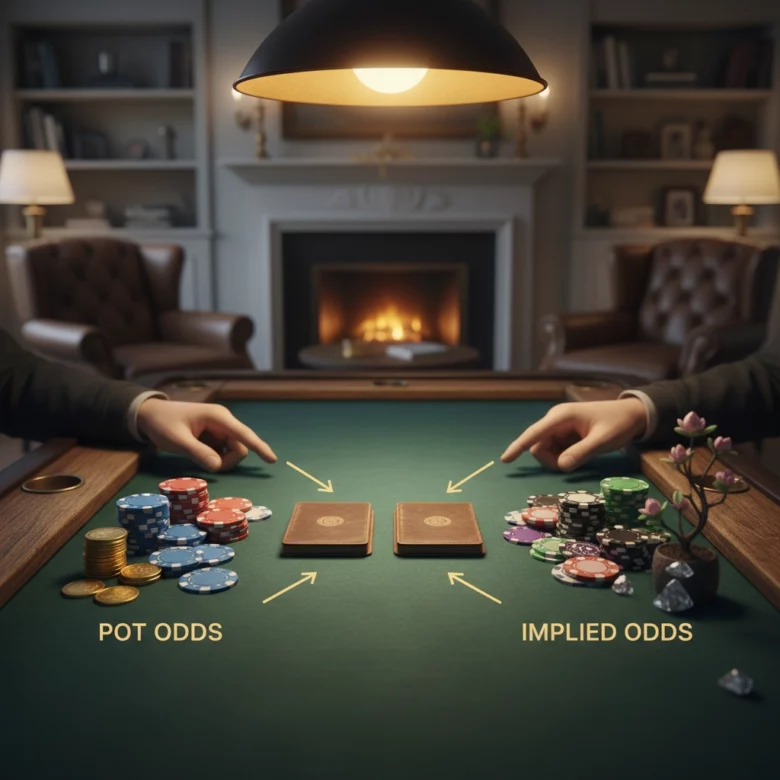
How mastering pot odds and implied odds improves your decision-making When you’re facing a bet, fold, or call, the math behind pot odds and implied odds helps you separate guesses from profitable choices. You don’t need to be a math wizard to use these tools—just a clear method for comparing the risk in front of …