


Why body language beats luck at live poker tables
When you play live poker, the cards are only part of the story. You sit in a room with breathing, blinking humans who leak information constantly. You can use body language to narrow down opponents’ ranges, decide when to bluff, and time your raises more effectively. By the end of this section you’ll understand why tells matter, how to approach them with skepticism, and how to start gathering reliable reads from the first hands you see.
How to think about tells without getting fooled
First, treat every tell as probabilistic evidence, not proof. A change in posture or a sudden fixation can increase or decrease the likelihood of a particular hand, but it should never override logical analysis of board texture, bet sizing, and range construction. You want to combine physical cues with game theory: use tells to shift your confidence and to refine decisions already suggested by the cards and previous action.
- Observe before acting: spend the first hands watching — not playing — to build context.
- Use baselines: learn each player’s normal behavior and flag deviations.
- Weight cues: not all tells carry equal value; micro-expressions and timing beats a single yawn.
Establishing baseline behavior: the single most important skill
Before you can interpret micro-movements, you must know what “normal” looks like for every opponent. A baseline is the typical set of actions and postures a player exhibits when nothing unusual is at stake. Once you have that baseline, deviations become meaningful signals instead of noise.
Fast, practical steps to set baselines at the table
- Watch the first five hands: note eye contact, chip handling, how quickly they make decisions, and where they look after seeing community cards.
- Record reaction timing: is this player a quick-decider or a ponderer? Quick decisions often mean marginal confidence; long deliberations can indicate difficult choices.
- Mark comfort gestures: fidgeting, rubbing the nose, or repeatedly checking a phone can be nervous ticks — but only relative to their baseline.
- Note bet-size patterns: physical tells are more reliable when correlated with consistent bet sizing for value or bluffing.
Example: if an opponent normally stares down the table but looks away after the turn when they have a big hand, that shift is meaningful. Conversely, if a player always avoids eye contact, you won’t draw useful information from their gaze alone.
Small, common tells that often reveal hand strength
Once you’ve established baselines, you can start cataloguing specific tells. Here are high-value, repeatable cues you can use immediately. Remember: context matters — a tell on the river is more valuable than the same cue preflop.
Eyes, face, and mouth
- Dilated pupils / brightening eyes: an instinctive uplift when someone sees a strong card — often a good sign of improvement on the turn or river.
- Lip compression or tight mouth: can indicate stress or concentration, sometimes when a player faces a tough decision with a medium-strength hand.
- Micro-smiles: a brief smile after a card hits the board often signals satisfaction — correlate with recent bets to guess value hands.
Hands, chips, and betting motions
- Slow, deliberate chip pushes: tends to be a confidence play, suggesting strong value hands when paired with steady eye contact.
- Fumbling with chips or cards: nervousness shows in shaky hands and can imply either a big bluff or genuine stress — use other cues to disambiguate.
- Covering the mouth or staring at chips: may indicate discomfort; if this behavior deviates from baseline after a bet, treat it as a potential weak-hold sign.
Posture and breathing
- Leaning forward: engagement and confidence; this can indicate a value hand when sustained into a showdown.
- Sudden relaxation or slumping: often follows missed opportunities or weak holdings — watch how this change aligns with the action.
- Shallow or rapid breathing: stress response that surfaces during big decisions; pair this with facial cues to strengthen your read.
Apply these observations conservatively. Always cross-check a perceived tell against betting patterns, stack sizes, and board texture. In the next part you’ll learn how tells map to specific hand ranges and how to use timing and verbal cues to separate genuine reactions from deliberate false tells.

Mapping tells to hand ranges: translate movement into probability
Once you’ve catalogued a player’s baseline and noticed a deviation, the next step is converting that physical cue into a plausible range. Think of every tell as a factor that shifts the weight you assign to different buckets — strong made hands, medium-strength hands, draws, and bluffs — rather than an on/off switch.
Practical framework:
– Start with a range from the action and board texture. For example, a caller on the flop who then raises the turn on a paired board is already polarized toward strong hands or bluffs.
– Apply the tell as a likelihood multiplier. If the tell is a high-value cue (sustained lean forward, steady eye contact, slow deliberate bet), increase the probability of a value hand. If it’s a stress indicator (shallow breathing, lip compression, fidgeting) that deviates from baseline when a bet is required, increase the weight toward weakness or an uncomfortable bluff.
– Combine cues. Two independent medium-value tells (e.g., micro-smile on the turn + confident chip push on the river) together can approach the reliability of a single high-value cue.
Examples you can use immediately:
– River snap-check then stare at you: a snap-check often indicates resignation. If this opponent normally checks slowly, a sudden fast check on the river often signals they gave up on a marginal holding. Treat this as an increased probability of a missed draw or weak pair.
– Long tank then a small bet: lengthy deliberation followed by a smaller-than-expected bet can signal a tough decision—often a medium-strength hand trying to control the pot. It’s less likely to be a stone-cold value shove.
– Confident chip shove with sustained eye contact on the river: high probability of a value shove; call frequency should increase unless other context (table image, ludicrous sizing) suggests a manufactured bluff.
Quantify where possible: for each tell, mentally assign a direction and rough magnitude (e.g., +10% more likely this player has a made hand). Over time you’ll calibrate these adjustments into intuitive percentages that help when building ranges under time pressure.
Use showdown information to refine mappings. If a player shows a pattern—say, always smiles when they hit two-pair on the turn—store that as a high-value mapping. If a cue proves inconsistent (e.g., the same reaction shows up with both bluffs and value hands), downgrade its weight and search for contextual discriminators like stack size or bet sizing.
Timing, speech, and spotting false tells: separating instinct from theater
Nonverbal cues are important, but timing and speech often carry equal or greater diagnostic value. Timing tells—the tempo of a decision—are among the most robust because they’re harder to fake consistently under pressure.
Timing heuristics:
– Snap raises/calls preflop: usually marginal hands or standard plays; rare to be premium if out of line with position and stack sizes.
– Instant checks on the river: often a sign of passivity or surrender; but beware of experienced players who check quickly as a deliberate deception.
– Tanks followed by aggressive action: can mean polarization. When someone tanks and then shoves, consider two possibilities: a well-disguised bluff or a very strong hand. Use betting patterns and revealed showdowns to decide which lean is correct in future hands.
Verbal cues to watch:
– Over-talkativeness: players who suddenly become chatty or joke a lot when facing a decision are frequently trying to unnerve or mask discomfort. This doesn’t always mean weakness — it can be a weaponized tell. Note whether their banter correlates over several hands with bluffs or value plays.
– Deflective comments: “I’m just playing terrible” or “I have nothing” can be literal but more often are defensive moves. Treat verbal denials as weak evidence unless they consistently map to revealed hands.
– Voice pitch and cadence: a higher pitch or clipped sentences under pressure can signal stress. Conversely, calm, steady speech during a big pot leans toward composed confidence.
Spotting false tells:
– Consistency is the enemy of deception. A single theatrical gesture is easy to fake; look for habitual, repeatable patterns. If a player suddenly changes their baseline after seeing you notice, they’re likely acting.
– Reverse tells: savvy players may deliberately adopt the opposite cues (smiling when bluffing, slumping when strong). If you suspect reverse tells, test them. Try a controlled bluff or value line and observe whether their behavior flips.
– Cross-check nonverbal with non-contextual signals. A dramatic show of nerves combined with an unusually large raise is suspect; are they exploiting your perceived reaction? Use micro-tests—small probes or blocking bets—to gather more information before committing large chips.
How to probe without overcommitting:
– Use small value bets or blockers to force a reaction cheaply. A modest bet can reveal whether an opponent’s tell intensifies or disappears when more money is at stake.
– Mix lines to keep your own tells ambiguous. If you exploit a read too often, opponents will adapt and either fake or reverse their tells.
– Keep notes in your head and confirm through showdowns when possible. Reliable tells are built on repeated, validated observations, not single moments of intuition.
These sections should give you immediate, table-ready methods to map physical and timing cues to ranges and to protect yourself from deliberate deception. In Part 3 we’ll apply these ideas to concrete river scenarios and practice routines you can use between sessions to sharpen your tell-reading skills.
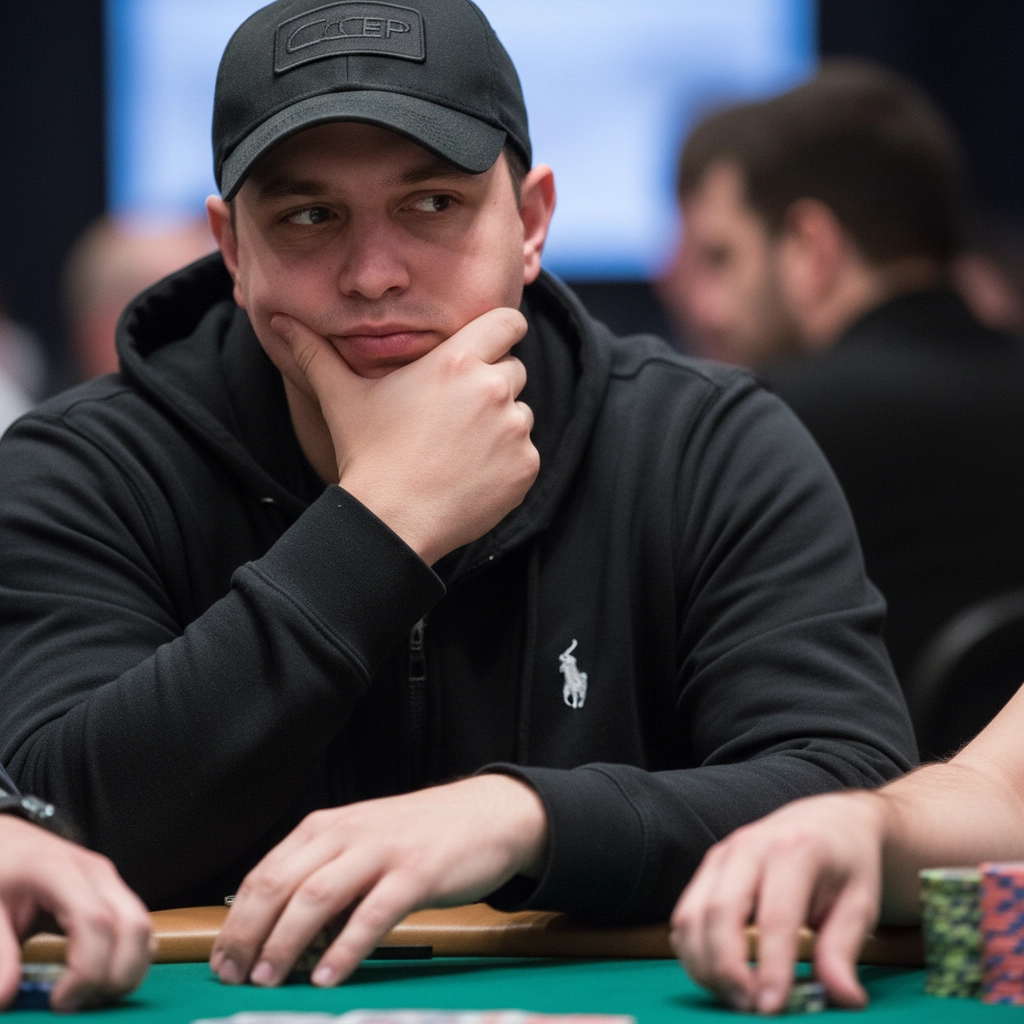
River drills and short scenarios to practice tonight
- Scenario A — The quick check on a scary river: Watch one table for 20 minutes and note every opponent who checks instantly on the river after a big turn bet. After a few showdowns, classify whether that quick check correlated more with missed draws or with traps. Use this to calibrate a mental +/− probability adjustment for instant checks.
- Scenario B — The long tank then small bet: Over a single session, mark every instance of long deliberation followed by a sub-pot bet. Track stack sizes and board texture to see when this pattern leans value versus pot control. Aim for at least 15 samples before trusting it.
- Scenario C — Confident shove with eye contact: When you see sustained eye contact on a river shove, note whether that opponent historically shows down strong hands or if they’re a table image manipulator. Test by occasionally folding and occasionally calling to observe outcomes.
- Practice drill — Observation-only rounds: Spend one hour per week watching live or streamed poker without touching chips. Focus solely on baseline behaviors, timing, and speech. Record 3-5 recurring tells per player and verify them in later sessions.
- Micro-test drill — Cheap probes: Use small blocker bets or check-raises in low-risk pots to force reactions. The goal is to collect behavioral evidence while minimizing bankroll exposure.
Putting tells into practice
Keep your approach iterative: observe, hypothesize, probe, and validate. Tells are only useful when paired with disciplined pot control and sound hand-reading fundamentals. Protect yourself from being deceived by testing reads across different stacks, positions, and opponents; when in doubt, favor the math and use small probes to gather more data. For further structured drills and deeper background on reading opponents, see further reading on poker tells.
Finally, respect the table. Ethical play and honest observation build better long-term results than relying on theatrics or exploiting reactions in ways that degrade the game. Keep practicing, stay curious, and let validated patterns guide your decisions rather than one-off instincts.
Frequently Asked Questions
How many observations do I need before trusting a tell?
A practical rule is to collect at least a dozen clear instances (showdowns or reliable outcomes) before assigning meaningful weight to a tell. The exact number depends on consistency—some high-signal cues emerge faster, but always verify across different stacks, positions, and bet sizes.
Can experienced players fake tells to mislead me?
Yes. Skilled players often use reverse or false tells deliberately. The best defense is to rely on multiple independent cues (timing + body language + bet sizing) and to validate reads with small probes rather than committing large chips based on a single gesture.
Are verbal cues as reliable as body language and timing?
Verbal cues can be revealing but are easier to weaponize. Use speech as supporting evidence rather than primary proof: sudden chatter or defensive comments are useful signals when they consistently map to behavior in multiple showdowns, but treat them cautiously on their own.