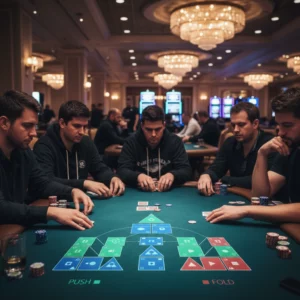


When the cards aren’t the only story: why reading tells helps your game
In poker, the cards you hold are only part of the equation. The rest of the information you can use comes from the people at the table. Reading tells—small physical or behavioral cues—lets you extract extra value, avoid traps, and make better fold/call/raise decisions. If you learn to combine what you see with the action and sizing, you turn ambiguous hands into clearer choices.
You should think of tells as probabilistic information, not certainties. A twitch, a gulp, or a sudden change in speech doesn’t prove a specific hand. Instead, a consistent change from a player’s baseline gives you an added edge. The key skills you’ll build are: establishing baselines, looking for clusters of cues, and interpreting tells in context with betting patterns and player types.
How to build the observation habit without tipping your hand
Before you start cataloging every eyebrow raise, you must learn to observe unobtrusively. Use these practice steps:
- Establish baseline behavior: Watch how each player acts when the pot is small or when they clearly have a weak hand. Note their usual speech tempo, posture, and chip handling.
- Look for changes, not absolutes: A nervous laugh when someone checks is only meaningful if that player normally doesn’t laugh at the table.
- Cluster cues together: One isolated wink or cough is weak evidence; a cluster—say, a body stiffening plus a long pause before a bet—is useful information.
- Match tells to player type: Tight players and loose players express strength and weakness differently. Adjust your read accordingly.
Physical tells that often indicate strength
Some physical signals commonly correlate with confidence or a strong holding. Use them as part of a wider read, and be especially attentive to these when they differ from a player’s baseline.
- Steady breathing and relaxed posture: A calm, measured player who sits back and breathes evenly often illustrates comfort with their hand. They may also make deliberate eye contact.
- Controlled, purposeful betting motions: Players who place chips deliberately, without fumbling or hesitation, often know what they want. A quick, efficient slide of chips into the pot can be a value-betting habit.
- Small, confident facial expressions: Micro-expressions such as a brief smile or tightening of the lips when you check can be signs of strength—especially if the player then bets quickly.
- Blocking bets or sizing consistency: If a player sizes bets consistently when strong, that pattern itself becomes a tell. For example, consistent large bets on the river can be a tell of confidence.
- Immediate affirmation: An instant raise or snap call sometimes indicates a made hand; they’re not seeking time to bluff or calculate outs.
Remember that some experienced players use “reverse tells” on purpose: acting nervous when strong. That’s why baseline and clustering matter. If a usually fidgety player suddenly becomes unusually composed, that change might be the real signal.
Behavioral and timing tells that suggest weakness
Players reveal discomfort in more obvious ways than they reveal confidence. When someone shows nervous or inconsistent behavior across multiple cues, you should be more willing to test them.
- Long, contemplative pauses: Hesitation before betting or calling can indicate uncertainty. If a player takes a long time and then makes a small bet, consider that they may be weak or drawing.
- Rapid speech or over-explaining: Players who suddenly chatter more, offer unsolicited commentary, or explain their moves are often trying to mask insecurity.
- Nervous physical ticks: Lip biting, throat clearing, darting eyes, or repeated glances at the pot may show that a player is uncomfortable and possibly weak.
- Fumbling chips and sloppy bets: Clumsy chip handling or collapsing posture after a bet can reflect a lack of confidence with the hand.
- Changes in breathing or swallowing: An audible breath or throat swallow at a key decision point can be part of a cluster indicating weakness.
Weakness tells can be easier to interpret than strength tells, but they carry their own traps. Some players intentionally act weak to induce bluffs. The safest approach is to seek multiple supporting signs—timing, bet size, and a deviation from baseline—before committing to a big decision.
Now that you know the general categories of physical and behavioral tells and how to build a baseline, the next section explains how to combine tells with betting patterns and player types to form reliable reads and avoid deliberate deception.

Marrying tells with betting patterns: read the story the action tells
Tells become far more powerful when paired with the betting story. A physical cue on its own is thin evidence; when it aligns with sizing, timing, and street-by-street action, it sharpens your range estimates. Treat each betting round as a sentence and each tell as a punctuation mark—together they form a narrative about what the player likely holds.
Use these practical ways to combine tells with betting patterns:
- Preflop tendencies set the framework: If a player only 3-bets preflop with premium hands, a quick snap 3-bet and then composed posture is strong evidence of a big hand. Conversely, if they frequently 3-bet light, don’t overweight a confident motion.
- Sizing as a signal of range: Large, polarized bets (very small or very large) often indicate either a dump (weakness) or polarization (nuts/air). A visible physical reaction alongside a polarized bet—like a sudden stillness—can mean a polarized strong hand. Small, hesitant bets paired with nervous ticks are more likely weak or drawing.
- Timing across streets: Note whether a player’s timing is consistent. A fast C-bet that becomes slow on the turn can indicate they hit or missed the board. If a player who usually tanks suddenly raises quickly on the river, that deviation may signal strength.
- Check-raises and reverse lines: A check-raise is a powerful action; pair it with baseline behavior. A player who slouches and hems and haws during a check but then launches a confident check-raise is probably strong. If they show visible relief after showing down a hand, add that to your memory bank.
- Showdowns as calibration tools: The most reliable way to learn how a player’s tells map to their range is to watch what they show at showdown. Use that information immediately: revise their baseline and the weight you give future cues.
Always think in ranges, not cards. A tell and a bet narrow an opponent’s range; use pot odds, position, and stack size to decide whether the narrowed range contains enough hands you beat or fear. When told and action contradict—say, a shaky physical tell with a stone-cold sizing pattern—lean on the betting first, then use the tell as a tiebreaker.
Adjusting reads by player archetype and table dynamics
Different player types express strength and weakness in distinct ways. Calibrating tells to archetype prevents misreads and helps you exploit habits reliably. Below are common archetypes and how to adapt your interpretation of tells for each.
- Tight-Aggressive (TAG): TAGs are risk-averse with marginal hands and deliberate with monsters. Give more weight to timing and bet sizing—when they act quickly and large, treat it as strong. A TAG’s nervousness is more significant because they have fewer marginal hands to justify it.
- Loose-Aggressive (LAG): LAGs bluff often and mix lines. They may act confidently with air. Don’t overread individual tells; instead, watch frequency of aggression and adjust by increasing the threshold of evidence required before folding to their strong actions.
- Calling station: These players call down with weak holdings and rarely bluff. Weakness tells from them are less actionable; you’ll want to value-bet thinner and rely less on physical cues to fold out hands.
- Maniac: Maniacs are unpredictable and use theatrics. Baseline is critical here: if their baseline is hyperactive, the absence of theatrics (sudden quiet) may be a more meaningful tell than any display of confidence.
- Exploitive player (observant but tricky): Some players intentionally reverse-tell. With them, prioritize patterns over single-session cues and test them with small probes. If they alter behavior in reaction, adjust accordingly.
Also factor in table dynamics—stack sizes, position, the stage of a tournament, and recent hands between you and that opponent. A short stack’s all-in shove accompanied by trembling is different from a deep-stack shove with the same tell; the incentives and likely ranges change.

Practical routines: test reads, avoid confirmation bias
To turn observations into reliable edges, develop simple routines you repeat each session. These rituals reduce bias and help you learn real patterns instead of fabricating stories to fit a moment.
- Record one observable baseline per opponent: Note their default timing and chip handling early in the game. Update it when you see consistent deviations.
- Use micro-tests: When you suspect a read, run a low-risk probe—call a small bet, make a modest raise, or check back a street to see how they react on the next street. Their subsequent action will either validate or falsify your hypothesis.
- Log showdowns: Mentally or physically note the hands opponents reveal. After each showdown, ask: “What did they do? How did they look? Does that match their baseline?”
- Beware confirmation bias: Seek disconfirming evidence. If a tell suggests strength, look for signs of weakness (timing, sizing) before putting a lot of chips at risk.
Consistent application of these routines builds a personal database of actionable reads. Over time you’ll learn which tells are genuine, which are theatrical, and how to combine them with the betting story to make better choices at the table.
Putting reads into practice
Learning to read tells is a long-game skill: approach it with curiosity, discipline, and humility. Treat each session as an experiment—test one hypothesis at a time, record outcomes, and adjust your baseline for each opponent rather than chasing dramatic “aha” moments. Keep your decisions anchored in pot odds, position, and stack dynamics; let tells nudge your choices, not replace the math.
Focus your effort where it matters most: early in a session pick one or two players to observe closely, log showdowns, and run low-risk probes to validate reads. When you want structured drills or further study, reliable resources can help you build that habit—see Poker strategy resources for drills, articles, and videos to deepen your practice. Above all, be patient: accurate reads compound into real edges only after repeated, calibrated experience.
Frequently Asked Questions
How reliable are physical tells compared to betting patterns?
Betting patterns and timing are generally more reliable than single physical cues because they reflect a player’s incentives each street. Physical tells can be useful when they consistently deviate from a player’s baseline and align with the betting story, but treat them as supporting evidence rather than proof.
What’s the best way to avoid being fooled by fake tells?
Assume some players will try to deceive and prioritize long-term patterns over one-off behaviors. Use micro-tests (small bets, check-backs) and track showdowns to verify whether a particular tell reliably maps to certain hands. If a player changes their behavior in response to being observed, reduce the weight you give to their physical actions.
When should I act on a tell during a tournament versus cash game?
Context matters: in tournaments, stack preservation and stage-specific incentives often narrow ranges, so a convincing tell combined with the betting story can be more actionable. In cash games, deeper stacks and willingness to gamble mean you should be stricter about the evidence threshold before committing chips. Always factor in stack sizes, payout implications, and table dynamics before acting on a read.