
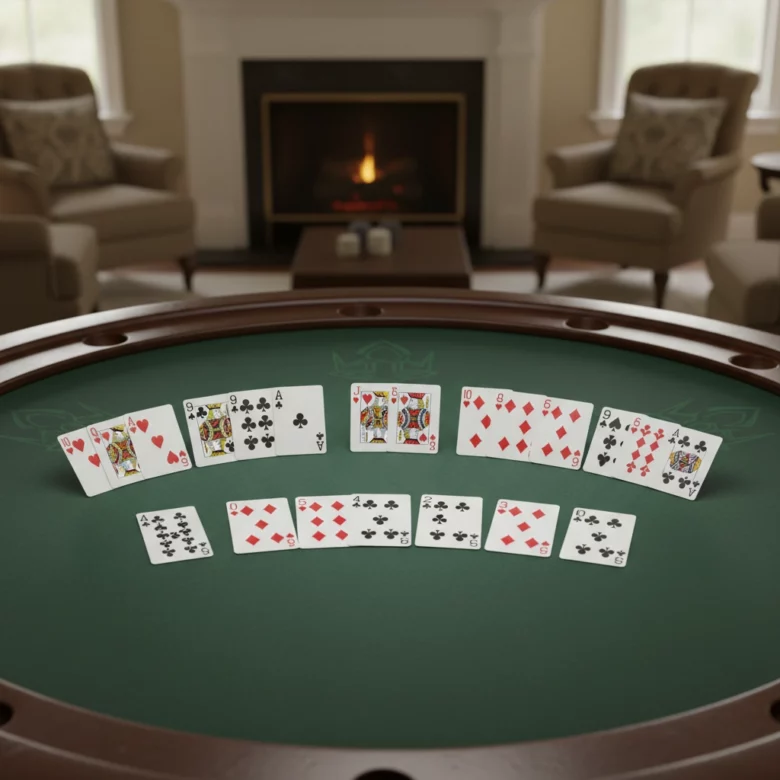
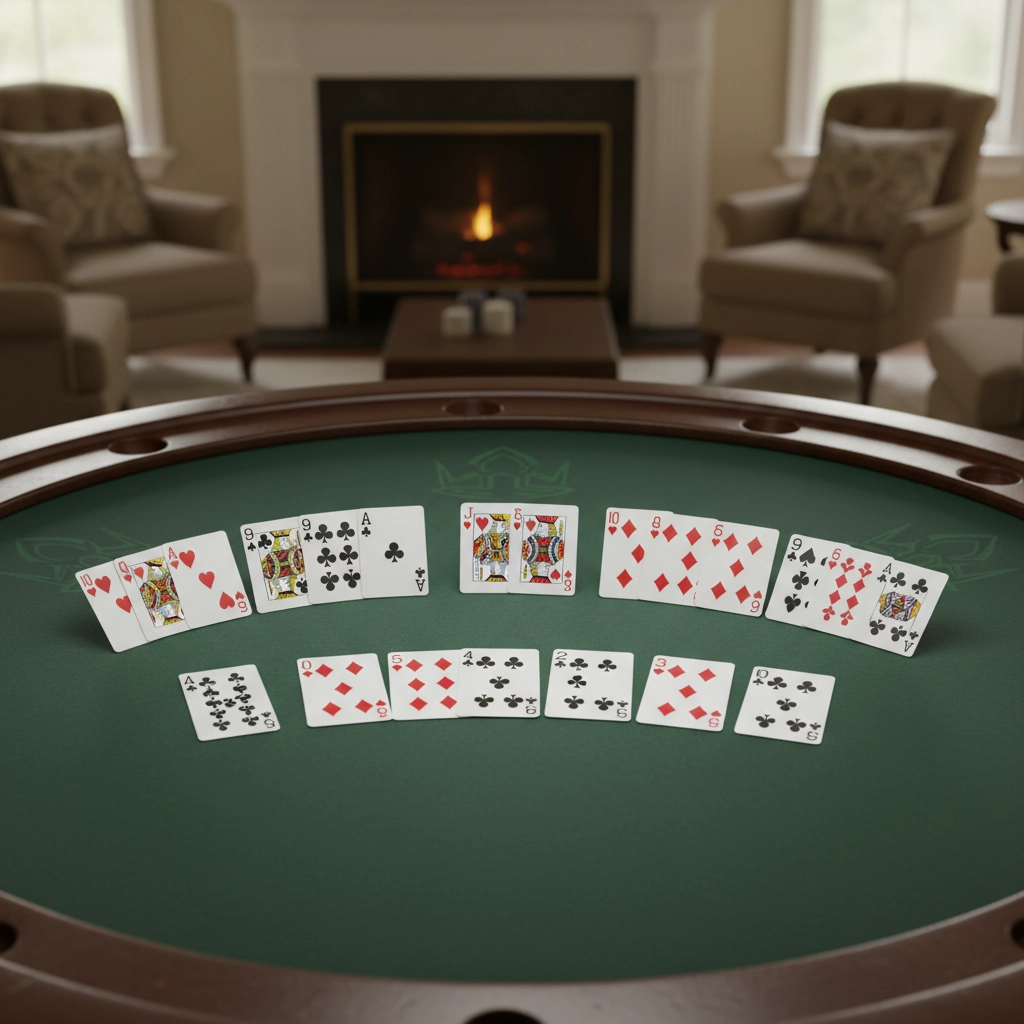
Why knowing poker hand rankings will improve your play
When you sit down at a poker table—online or live—every decision you make depends on one simple question: how strong is your hand? If you can quickly recognize the value of the cards in front of you, you’ll make better folding, calling, and betting choices. Poker isn’t just about luck; it’s about making the right decisions based on hand strength, position, and the betting action.
Most popular poker games use the same core ranking system: five-card hands are compared from highest to lowest. In games like Texas Hold’em and Omaha you combine your hole cards with community cards to form the best possible five-card hand. In stud games you use the cards dealt to you. No matter the format, understanding the ranking order is the foundation of good poker.
How hand strength affects your strategy
- Preflop decisions: Knowing whether your starting cards can make a top hand helps you decide whether to enter the pot.
- Postflop evaluation: After community cards appear, you must reassess the likely best hands and your drawing potential.
- Bet sizing and bluffing: If you understand which hands beat yours and which ones you beat, you can size bets to extract value or fold before losing more.
The standard hierarchy of poker hands — an easy checklist to memorize
Below are the poker hands ranked from strongest to weakest, with short, practical descriptions and examples. Memorize this list and practice recognizing these patterns; that speed will save you chips and improve decision-making.
- Royal Flush — The absolute best hand. A, K, Q, J, 10 of the same suit (for example: A♠ K♠ Q♠ J♠ 10♠). It’s unbeatable.
- Straight Flush — Five consecutive cards of the same suit (for example: 9♥ 8♥ 7♥ 6♥ 5♥). A royal flush is a straight flush at the top end.
- Four of a Kind (Quads) — Four cards of the same rank plus one side card (kicker). Example: Q♦ Q♠ Q♥ Q♣ 7♣. Kickers decide ties between identical quads.
- Full House — Three of a kind plus a pair (for example: 8♣ 8♦ 8♥ 4♠ 4♥). Full houses are ranked first by the three-of-a-kind rank, then by the pair.
- Flush — Any five cards of the same suit, not in sequence (for example: K♥ 10♥ 7♥ 4♥ 2♥). If two players have flushes, the highest card in the flush decides the winner.
- Straight — Five consecutive cards of mixed suits (for example: 6♣ 5♦ 4♠ 3♦ 2♥). Aces can be high (A-K-Q-J-10) or low (5-4-3-2-A) but not both at once.
- Three of a Kind (Trips or Set) — Three cards of the same rank plus two unrelated side cards. Example: J♣ J♦ J♥ 9♠ 2♣. In games with community cards, “set” often refers to a pocket pair that hits a third on the board.
- Two Pair — Two different pairs plus a side card (for example: K♠ K♦ 6♥ 6♣ 3♠). Ties are broken first by the highest pair, then the lower pair, then the kicker.
- One Pair — Two cards of the same rank plus three unrelated side cards (for example: 10♣ 10♦ K♠ 7♥ 4♣). Kickers are critical when pairs match.
- High Card — If no player has any of the above hands, the highest single card wins (for example: A♣ Q♦ 9♠ 6♥ 2♦ — “ace high”).
Tip: In Texas Hold’em you always make the best possible five-card combination from the seven cards available (your two hole cards and five community cards). Knowing which five cards make the top hand at a glance is a skill you’ll develop with practice.
Now that you know the basic order and what each hand looks like, the next section will show you how ties are broken, how suits affect outcomes, and specific examples of hand comparisons in Texas Hold’em and Omaha to reinforce these rules.

How ties are broken — kickers, suits, and “playing the board”
Knowing the ranking order is only half the battle. In real hands you’ll often face situations where two or more players have the same primary combination (for example, both have a pair or both make a flush). That’s when tie-break rules and kickers decide who wins.
- Kickers matter: A kicker is any side card that isn’t part of your main hand (pair, two pair, trips, etc.). When two players share the same ranking combination, you compare the highest unrelated cards in descending order until a difference appears. Example: A♠ 10♦ 6♣ 3♦ 2♥ vs A♥ 9♣ 7♠ 4♣ 2♠ on a board showing A♦ K♣ 5♥ 2♦ 8♣ — both have pair of aces, but the player with the 10 kicker beats the player with the 9 kicker.
- Full house and quads: For full houses, compare the three-of-a-kind portion first, then the pair. For quads, the rank of the four identical cards decides the winner; the kicker only matters if the quads are the same rank (rare, but possible with community-card games).
- Flush and straight ties: Flushes are compared by highest card, then second-highest, and so on. Straights are compared by their top card — A-K-Q-J-10 beats 10-9-8-7-6. If both players share the exact same five-card combination (this can happen when the best five cards are all on the board), the pot is split.
- Suits don’t rank: In standard poker, suits have no intrinsic value — there is no “spade beats heart” rule. Suits only matter for determining whether a flush exists. If two players make the exact same flush from the same five cards, they tie.
- Playing the board: In Hold’em it’s possible that the best five-card hand uses only the community cards (for example, the board itself is A♠ K♠ Q♠ J♣ 10♦ — the best straight is on the board). When every player’s best five-card hand is the board, the pot is split. This is important to recognize at showdown: even if you hold hole cards that look useful, they may not improve your five-card combination.
Tip: Always identify the five-card hand for each player and compare those. Saying “I have ace high” isn’t enough — ask yourself which five cards form that “ace high” combination, then compare kickers if necessary.
Showdown examples in Texas Hold’em and Omaha — practical comparisons
Seeing rules applied to real boards helps cement them. Below are common scenarios you’ll encounter, with plain explanations of how winners are determined.
Example 1 — Kicker decides (Texas Hold’em)
Board: K♦ 10♣ 6♠ 3♥ 2♦
Player A: K♠ 9♥ (pair of kings, kicker 9)
Player B: K♥ 8♣ (pair of kings, kicker 8) — Winner: Player A.
Both players have one pair (kings). Compare kickers: 9 beats 8, so Player A wins.
Example 2 — Split pot because of the board
Board: A♣ K♣ Q♣ J♦ 10♠
Player A: 2♠ 3♠
Player B: 4♦ 5♦ — Result: split pot.
The best five-card hand is A-K-Q-J-10 (a broadway straight) using only the board. Neither player improves it with their hole cards, so they tie and split the pot.
Example 3 — Full house tie-break
Board: 9♠ 9♥ 6♦ 6♣ 2♣
Player A: 9♦ 3♠ (makes a full house: nines full of sixes)
Player B: 6♥ 6♠ (makes a full house: sixes full of nines) — Winner: Player A.
Compare the three-of-a-kind part first: Player A’s three nines beat Player B’s three sixes, so Player A wins even though Player B has paired the board as well.
Example 4 — Omaha requires exactly two hole cards
Board: A♦ K♦ Q♦ 7♣ 2♥
Player A (Omaha): A♣ 9♦ J♦ K♣ — Best hand: A♦ K♦ Q♦ J♦ 9♦ (a diamond flush using exactly two hole cards: A♣ and K♣ are hearts/clubs so they can’t both be used; here the winning flush must use two diamonds from the player’s hand — adjust to a valid Omaha example)
Correction for clarity: In Omaha you must use exactly two hole cards plus three from the board. If Player A holds A♣ J♦ 9♦ K♣ and Player B holds Q♦ 10♦ 8♠ 3♣, only Player B can use two diamonds from their hand (Q♦ and 10♦) plus three diamonds on the board to make the nut flush. Player B wins because they can legally combine two hole diamonds with three board diamonds. This rule makes strong hands more common in Omaha and pay careful attention to which hole cards actually contribute.
Practical Omaha tips: Because you must use exactly two hole cards, many tempting-looking combinations in your hand won’t be legal at showdown. Always count whether you have two of the cards needed to complete a strong five-card hand — and be wary of multi-way pots where someone else can use different two cards to make a higher hand.
Final practical notes for new players: In multi-way pots assume someone could have a better kicker, a higher flush, or a fuller house — tighten up preflop and be cautious with one-pair hands on coordinated boards. Practice reading the board and naming the best five cards for every player; that habit will quickly improve your showdown decisions.
Parting advice for getting better at showdowns
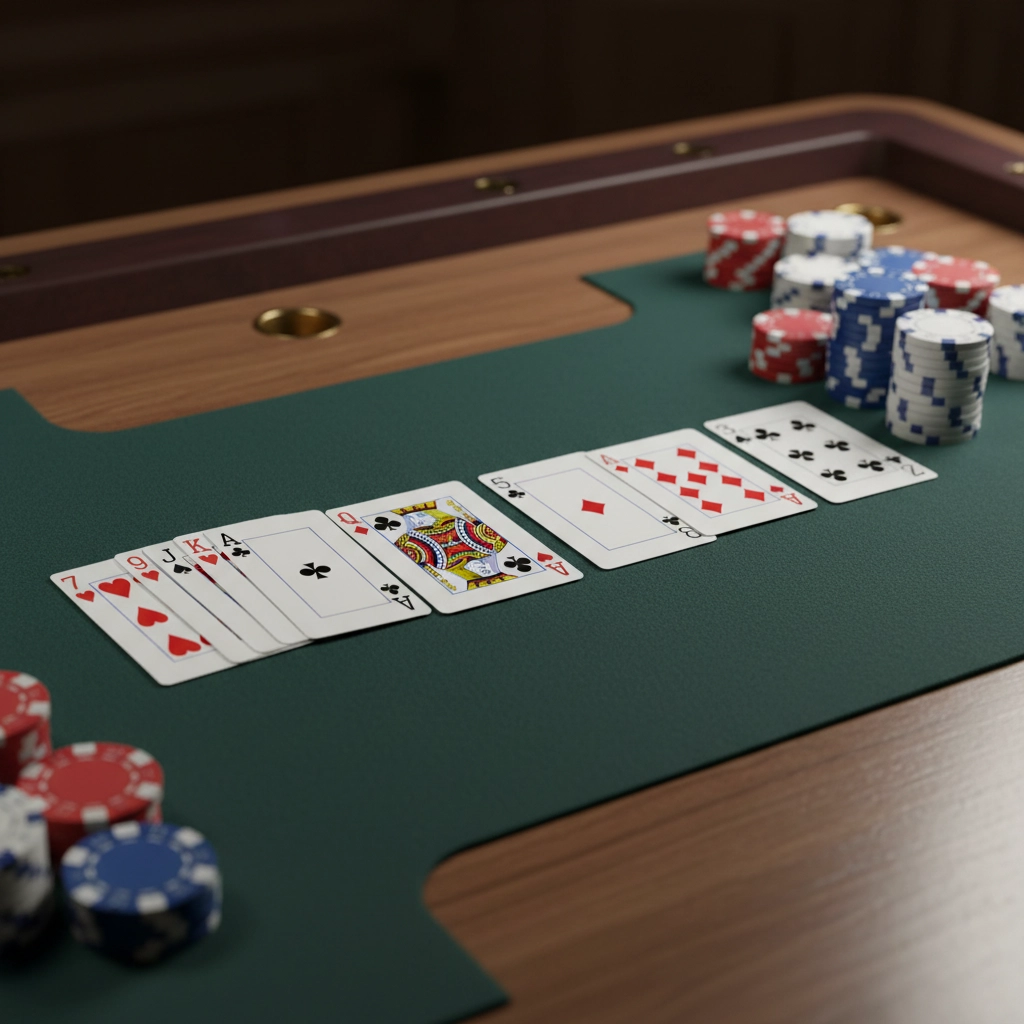
Getting comfortable with hand rankings, kickers, and showdown rules takes time, but small habits speed the process: always identify the five-card hand each player can make, count kickers when pairs or trips are involved, and in Omaha double-check that exactly two hole cards are being used. Play low-stakes or free games to practice without pressure, review hands after a session, and use reputable resources to study specific variants and edge cases — for official rules and examples, see official Texas Hold’em rules.
Frequently Asked Questions
What exactly is a kicker and when does it decide the winner?
A kicker is any card not part of your main combination (pair, two pair, trips, etc.). When players have the same primary combination, compare the highest unrelated cards in descending order until a difference appears. If all five cards used are identical between players, the pot is split.
Can suits ever break a tie?
No — in standard poker suits have no ranking value. Suits only matter to form combinations like a flush. If two players make the exact same five-card hand (for example, the best hand is entirely on the board), the pot is split regardless of suits in their hole cards.
How does Omaha differ at showdown from Texas Hold’em?
In Omaha you must use exactly two hole cards and three community cards to make your five-card hand. That requirement can nullify seemingly strong holdings that would work in Hold’em, so always verify that you can legally combine two hole cards with the board to form your final hand.