What Poker Tells Actually Are and Why They Matter
Every live poker player, regardless of experience, leaks information at the table. Sometimes it is a slight hesitation before betting. Sometimes it is an unconscious shift in posture, a comment made at the wrong moment, or a change in breathing when a dangerous card falls. These signals are called tells, and reading them with any degree of accuracy can give a thoughtful player a meaningful edge over time.
A tell is any observable behavior that provides a clue about the strength of a player’s hand or their likely next action. Not every behavioral signal is reliable. Some players display consistent patterns they are unaware of, while others deliberately project false signals to mislead opponents. The skill lies in distinguishing genuine leaks from misdirection.
Tells are one layer of a much larger strategic picture. No single physical cue should drive a decision on its own. A competent player uses tells alongside hand reading, position, bet sizing, and opponent tendencies to form a complete assessment. Misreading a tell and acting on it recklessly can be just as costly as ignoring the information entirely.
The Three Categories of Live Tells Worth Studying
Live tells generally fall into three broad categories: physical tells, verbal tells, and behavioral patterns. Each communicates different types of information and requires a slightly different approach to interpret accurately.
Physical Tells and Body Language
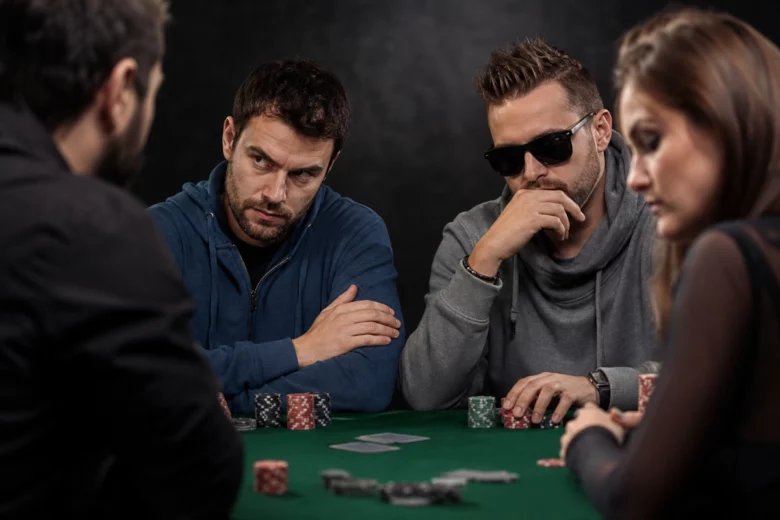
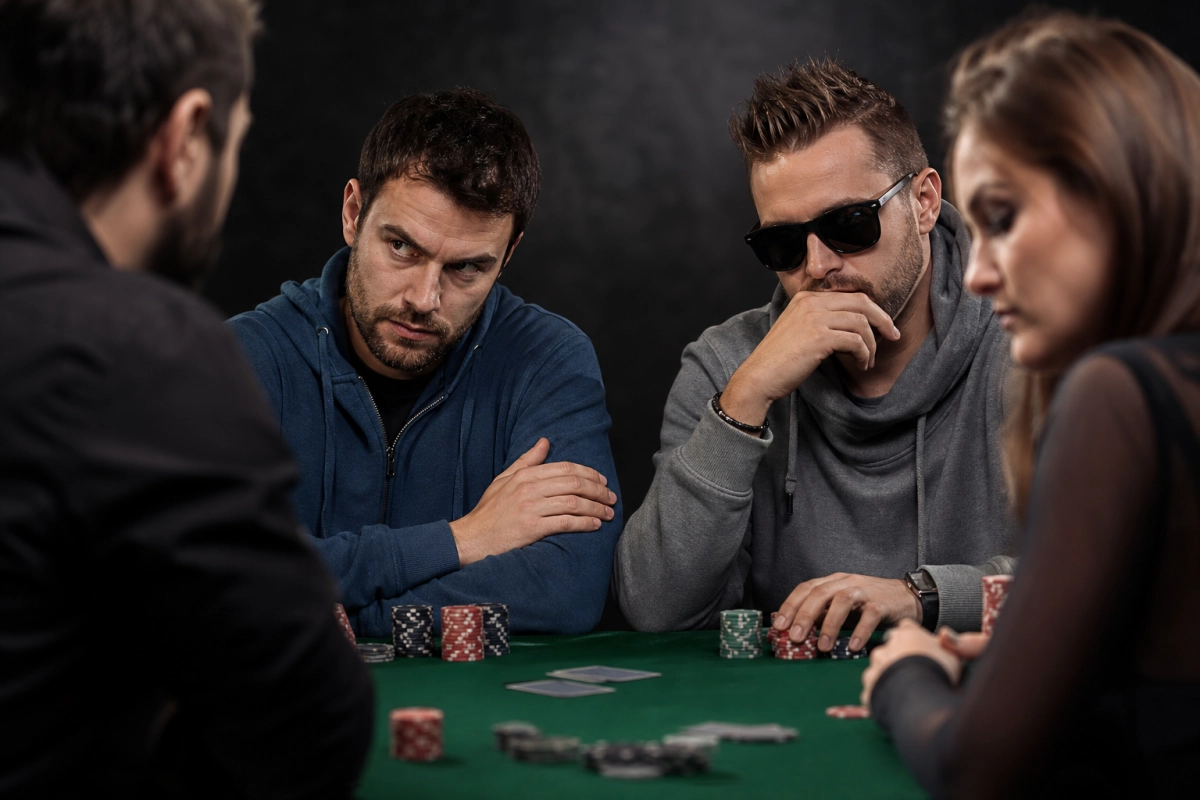
Physical tells involve involuntary or semi-voluntary changes in a player’s body. Common examples include trembling hands, changes in eye contact, a visible pulse at the neck, and adjustments in posture.
Hand trembling is one of the more reliable physical patterns. When a player’s hands shake slightly while placing a bet, it tends to indicate genuine excitement rather than anxiety, and frequently correlates with a strong hand. However, this pattern is far more consistent in recreational players. An experienced player may have suppressed such reactions, or learned to simulate them.
Eye behavior is among the least reliable physical tells. Staring down an opponent or avoiding eye contact can mean very different things depending on the individual. Sharper observers tend to focus on the body as a whole, particularly the chest, shoulders, and hands, rather than fixating on the eyes.
Verbal Tells and What Players Say Under Pressure
Verbal tells can be surprisingly revealing because most players do not carefully monitor what they say. The classic principle is one most experienced players know: strong means weak, and weak means strong. A player who announces confidently that they have a huge hand while pushing in a bet is often bluffing. Genuine strength tends to be quieter. A player who sighs or says “I guess I’ll call” before making a decisive raise is frequently acting.
Timing within verbal interactions also carries weight. Paying attention to how a verbal cue connects to the action that follows builds a more accurate profile of a player’s habits over multiple hands. Beyond deliberate speech, involuntary vocal changes such as a slightly higher pitch, a dry throat, or faster talking can signal emotional pressure. These are harder to fake and tend to emerge when a player is anxious, whether they are bluffing or facing a bet they are unsure how to handle.
Timing Patterns and Betting Rhythms as Behavioral Tells
Of all the tell categories available to a careful observer, timing is arguably the most underappreciated. Unlike physical reactions, timing patterns are observable from anywhere at the table and accumulate into meaningful data across a session. A player who consistently acts within two seconds when holding a strong hand but takes noticeably longer with marginal holdings is broadcasting that pattern to anyone paying attention.
The key to using timing accurately is establishing a baseline first. Watch how long a specific player takes on routine decisions before drawing conclusions from any deviation. The tell is not the absolute pace but the change from their established norm. A chronically fast player who suddenly pauses for fifteen seconds before a river call is telling a story, and that story usually involves genuine uncertainty.
Betting rhythms extend beyond raw speed. A smooth, practiced motion on a large bet often suggests comfort and confidence. A hesitant, slightly awkward delivery of the same bet can suggest a player overriding their own uncertainty, which frequently accompanies bluffing. How chips are counted before a bet can also reveal premeditation. A player who had their raise already counted before the action reached them had made their decision in advance, which is itself informative.
The Check-Then-Raise Pattern and What It Usually Signals
When a player checks and then faces a bet, the speed of the raise that follows is telling. An immediate snap check-raise on the flop often indicates a very strong hand, because the player likely planned the line in advance. A delayed check-raise can indicate either a genuine tough decision or a player constructing a story. The difference usually becomes clearer when combined with board texture and knowledge of that player’s tendencies.
Bet sizing patterns across multiple hands also function as behavioral tells. A player who consistently bets two-thirds of the pot with strong hands but shifts to smaller sizing when bluffing has created an exploitable habit. Tracking sizing in relation to outcome, even mentally, builds a useful profile that can influence decisions later in a session.
Disguising Your Own Tells Without Becoming a Robot
Understanding tells in other players is only half the equation. A player who can read others but fails to manage their own behavioral leaks is handing back whatever edge they gain. Disguising tells does not require theatrical performance. Players who overcorrect often create new tells in the process. Forced stillness, exaggerated slow breathing, or a rigid stare can be just as readable as natural nervous reactions.
The more effective approach is building consistent routines. If you handle your chips the same way, take roughly the same amount of time to act, and follow a standardized physical process for every decision, deviations become much harder for opponents to identify. Some players adopt a practice of counting to a fixed number internally before acting, regardless of whether they hold a monster or complete air. This behavioral discipline is not about appearing robotic; it is about removing the variance in your conduct that sharp opponents can exploit.
Verbal consistency is equally important. Many players freely chat with weak hands as a deflection tactic, then go quiet with strong ones, or vice versa. Either way, the shift is a pattern. The solution is not permanent silence, which itself becomes a signal, but maintaining a similar level of engagement regardless of hand strength.
- Use a consistent pre-action routine for every decision, including mundane folds
- Avoid narrating your thought process out loud, even casually
- Keep chip handling and bet placement physically identical across all hand strengths
- Resist the urge to look immediately at the flop when it is dealt, as the timing of that glance can carry information
- Practice controlled breathing in moments of genuine pressure to prevent visible physiological reactions
Reading the Table Is a Skill You Build Hand by Hand
No single session will make you an expert in live tells. What transforms an observant player into a genuinely difficult opponent is the accumulation of detail over time — the slow construction of accurate profiles, the gradual recognition of your own patterns, and the discipline to let behavioral information inform decisions rather than dictate them.
The most effective readers at a live table are not fixating on every twitch and glance. They are the ones who have quietly established baselines for every player, noticed meaningful deviations from those baselines, and filed that information away for exactly the right moment. Tells rarely win pots in isolation. They confirm a read that the rest of the evidence was already suggesting, and in those moments, that confirmation is worth something real.
What separates genuinely sharp live players from those who merely understand the theory is the quality of their attention. Watching the table when you are not in a hand, resisting the pull of your phone during long folds, staying present during hands you have already mucked — these habits compound quietly over hours and sessions into a depth of knowledge about the players around you that cannot be shortcut.
Pair that sustained attention with a disciplined, consistent presence at the table and you create a genuine two-sided edge: you become harder to read while the people across from you become more legible with every hand that is dealt. That combination, applied patiently and honestly, is where the real advantage in live poker quietly lives.