
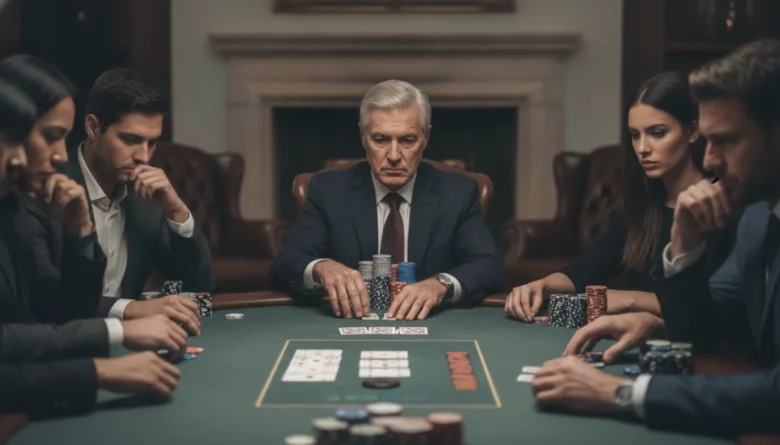

Why the Greatest Poker Players Matter to Your Game
You watch the champions because they condense decades of learning into repeatable habits. Studying the best players of all time helps you separate transient trends from enduring principles. When you focus on what consistently wins championships — not just flashy hands — you develop a framework that improves results across cash games and tournaments.
Champions teach you more than specific plays; they reveal how to think about risk, adjust to opponents, and manage long sessions. In this section you’ll get a clear lens for evaluating strategies: which are foundational, which depend on era or format, and which are psychological tools you can adopt immediately.
Core Championship Strategies You Can Use Right Now
Championship-winning play is built on a handful of repeatable skills. You can practice these deliberately to level up quickly:
- Position and hand selection: Winning players prioritize opportunities where position magnifies decision-making. You should tighten or widen your opening ranges based on seat and table dynamics.
- Bet sizing with intent: Champions size bets to achieve a specific purpose — value, fold equity, or pot control. Think in terms of what you want your opponent to do when you choose a size.
- Exploitative balance: You learn both equilibrium concepts and exploitative deviations. Use game theory to understand balance, then exploit observable tendencies at your table.
- Mental endurance and tilt control: Tournament wins often come from staying steady. Work on routines that preserve focus and keep emotions from dictating plays.
- Table selection and bankroll discipline: Even the best players pick the right spots and protect their roll. You should treat game selection as part of strategy, not luck.
- Reading opponents and adaptive strategies: Hand reading, timing patterns, and betting sequences tell you more than any single play. Champions constantly update their reads and change gears accordingly.
Practice these elements separately — drills on bet-sizing, focused sessions on positional play, and deliberate opponent profiling — then combine them in real play. Over time those practices compound into championship-level decision-making.
Early Legends and the Origins of Winning Play
The strategies above didn’t emerge overnight; they evolved from the styles of early greats. You can trace many modern concepts back to a few pioneers who transformed poker thinking:
- Johnny Moss & endurance: His ability to outlast and out-adjust opponents highlighted the value of patience in long matches.
- Doyle Brunson & aggressive adaptation: “Texas Dolly” popularized pressure play and creative hand construction — showing you how aggression plus disguise forces mistakes.
- Stu Ungar & hand-reading excellence: Ungar’s uncanny ability to deduce ranges under uncertainty demonstrates the premium on observation and inference.
Understanding how these players applied core skills in their era helps you see which tactics are timeless and which require modern refinement. In the next section, you’ll get concrete hand examples and analysis of modern champions who refined these principles into current winning formulas.
Modern Champions: Hands that Define Contemporary Strategy
Modern greats distilled the core skills into repeatable lines you can study hand-by-hand. Below are three representative hands — each tied to a living champion’s approach — that show how contemporary winners blend game theory, psychology, and situational adjustment.
-
The small-ball pressure (Phil Ivey–style):
Situation: Middle position raises, Ivey calls on the button with A8s. Flop comes 9-7-4 rainbow. Villain continuation-bets; Ivey calls. Turn is an offsuit 2. Opponent bets again; Ivey raises.
Why it works: Ivey often turns marginal hands into pressure plays by leveraging position and opponent tendencies. The raise on the turn has three purposes — protect vulnerable equity, price out draws, and force decisions where marginal ranges (weak pairs, overcards) fold. At lower stakes, mimic this by practicing one-raise/minor-pair turns with larger sizes when your read suggests the opponent c-bets wide.
-
Range reading and narrative building (Daniel Negreanu–style):
Situation: Early-position limp, late-position limp, Negreanu raises from the small blind with KQs. Flop: K-8-3 with two clubs. Negreanu leads after villain checks. Turn brick. Opponent check-calls small bets but folds to pressure on the river.
Why it works: Negreanu’s strength is constructing a believable betting story that forces opponents into narrow defenses. His leads and polarized sizing create a narrative (top pair or strong bluff) that’s hard for a caller with middle-strength hands to navigate. Practice building betting sequences that represent coherent ranges rather than isolated bluffs.
-
ICM-aware aggression in tournaments (Fedor Holz / Justin Bonomo–style):
Situation: Late-stage MTT, shallow stacks on the bubble. Player with medium stack shoves a wide range; big stack calls with top pair, but Holz-like player uses pressure to steal antes and chip up with controlled aggression in medium pots.
Why it works: Modern tournament champions exploit ICM dynamics: applying pressure when opponents are risk-averse, and folding into risk-averse spots when the equity cost is too high. Drill simulated bubble situations with staged stacks to learn when to tighten and when to widen shoving/3-bet ranges.
Translating Championship Lines to Your Stakes: Practical Drills
Studying hands is only useful when you convert insights into habits. Use these drills to internalize championship lines and make them second nature at your tables.
- Bet-sizing drill: Play 50 hands focusing only on pre-set sizes — 40% pot as a standard c-bet, 70% for turn protection, 50–60% for value on wet boards. Keep a log: success rate, fold equity observed, and how often you were called.
- Range visualization: Before each hand in a 30-minute session, write down opponent ranges in three buckets (strong, medium, weak). After the hand, compare your buckets to the showdown. This trains accurate range assessment under time pressure.
- ICM and push/fold practice: Use a free ICM trainer or short-stack simulator for 100 shove/fold scenarios. Track optimal fold frequencies and then practice applying looser shoves when opponents show predictable tightness.
- Post-session hand reviews: Pick five hands per session where you deviated from standard lines. For each, note the read, the intended goal of your sizing, and an alternate line. Over weeks, these notes will reveal leaks and pattern improvements.
Putting Championship Principles into Long-Term Practice
Great players don’t get there by accident — they build durable habits, a resilient mindset, and a continual feedback loop. Your best move now is to pick one or two principles from this article and practice them with intention: deliberate drills, focused hand reviews, and realistic simulations that mimic the pressure of real games.
A short action plan
- Choose one drill per week (bet-sizing, range visualization, or ICM practice) and track measurable outcomes.
- Keep a simple review journal: three hands per session, one leak identified, one experiment to test next time.
- Mix study formats — hand history analysis, video breakdowns, and live play — to build transferable skills.
- Prioritize tilt control and recovery routines as seriously as technical study; mental edges compound like bankroll discipline.
- Regularly benchmark yourself against the pros by following results and lines from top players using resources like the Hendon Mob player database.
Keep your goals specific and time-bound: small, sustained improvements beat sporadic bursts of study. Stay curious, test your assumptions at the table, and treat each session as an experiment. The champions you study offer a map — now go build your own route and enjoy the process of getting better.
