
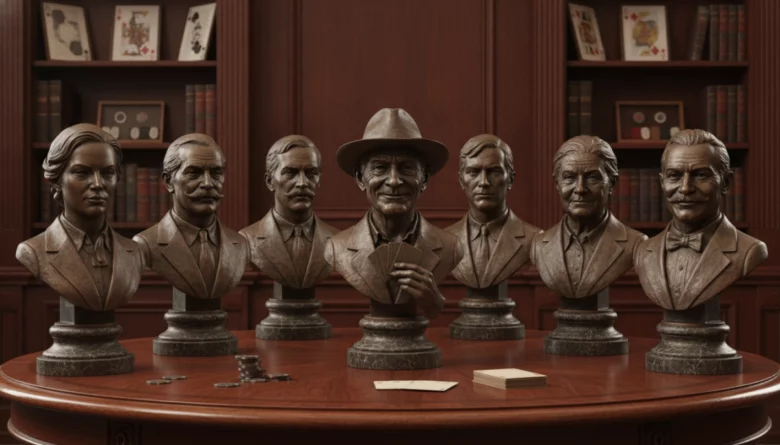

Why the Poker Hall of Fame matters and what you should look for
You probably know the Poker Hall of Fame as the highest honor in the game, but understanding its role helps you appreciate each inductee. The Hall recognizes players and contributors whose careers changed poker — through consistent excellence, influence, or memorable achievements. When you follow the Hall of Fame, you learn not just who won the biggest events but why certain styles, strategies, and personalities left an imprint on the game.
As you read profiles of Hall members, focus on three things: tournament success, longevity and adaptability, and contributions to poker culture or theory. Some members built their reputations at the World Series of Poker (WSOP), others by innovating strategy or popularizing the game through books and media. Keeping those criteria in mind will help you evaluate lesser-known names as well as legends.
How members are selected and why selection matters to fans
The selection process combines peer voting and a panel of media and industry professionals. That mix means the Hall balances statistical accomplishment with intangible influence. For you as a fan, this explains why certain inductees may have modest trophy counts but enormous cultural impact — they taught the game, inspired generations, or transformed how poker is played on TV and online.
Knowing the selection logic also helps you spot trends in poker history. Early inductees often dominated the felt in the pre-television era, while newer members reflect televised poker, online play, and global expansion. This historical perspective makes the Hall a great roadmap for understanding poker’s evolution.
Early legends whose play and personalities you should know
You’ll encounter players from poker’s formative decades who laid the groundwork for modern competition. These early Hall members are essential reference points because they set strategic norms, produced iconic hands, and became faces that drew attention to the sport.
-
Johnny Moss — the archetypal grinder
Johnny Moss was among the first greats. Known for his patient, psychological approach, Moss dominated cash games and early WSOP events. If you study classic hand-reading and endurance in poker, Moss’s career offers instructive examples of steady, less flashy excellence that wins over decades.
-
Doyle Brunson — the author and risk-taker
Doyle Brunson combined tournament success with cultural influence. As a two-time WSOP Main Event champion and author of a foundational strategy book, Brunson gave you concrete tools and legendary anecdotes. His aggressive style and willingness to embrace high-stakes risk made him a template for modern heads-up and tournament aggression.
-
Stu Ungar — raw talent and high-stakes brilliance
Stu Ungar is a study in sensational ability and tragic inconsistency. A prodigy at card-reading and no-limit hold’em, Ungar’s multiple Main Event wins show peak performance at the highest level. When you review his hands, focus on the instincts and pre-flop ranges that made him nearly unbeatable in his prime.
These profiles introduce the patterns you’ll see throughout the Hall of Fame: endurance, innovation, and an ability to influence others. In the next section you’ll meet mid- and late-era inductees whose strategies, media presence, and online success reshaped modern poker.
Daniel Negreanu — the crowd-pleasing strategist
Daniel “Kid Poker” Negreanu represents a model that many modern players try to emulate: elite tournament results combined with constant public engagement. He built his reputation on extraordinary hand-reading ability and table psychology — often turning marginal situations into profitable folds or bluffs by sizing and timing plays to maximize information. Beyond the felt, Negreanu helped normalize accessible poker commentary: vlogs, podcasts, and regular social-media interaction brought strategy talk to a mass audience.
For fans studying the Hall, Negreanu is useful for two reasons. First, watch how he adjusts ranges and bet-sizing as tournaments progress — the small, disciplined shifts are textbook modern tournament play. Second, follow his teaching and media output; his willingness to explain thought processes shows how theory traveled from elite circles into mainstream study tools and training sites.
Phil Ivey — the versatile grinder who blurred the lines
Phil Ivey is often cited as the purest competitive threat in recent decades. What sets him apart is not just wins but versatility: he has excelled in no-limit hold’em, mixed games, and the biggest cash tables, which is why many peers call him the benchmark for greatness. Ivey’s game is compact, intensely focused, and adaptable — a master of extracting maximum value while minimizing exploitability.
As a fan, study Ivey’s hands to see elite-level pattern recognition and restraint in action. He rarely forces heroics; instead, he turns marginal edges into long-term profit through consistency. Watching how he navigates multiway pots, strange board textures, and deep-stack dynamics illuminates the subtle differences between top pros and very good players.
Mike Sexton — the ambassador who made poker mainstream
Not every Hall inductee is enshrined for final-table exploits alone. Mike Sexton’s legacy shows the power of promotion and voice. As a longtime World Poker Tour commentator and tireless promoter, Sexton helped transform poker into a spectator sport. His friendly, educational commentary softened the game’s image and made broadcasts inviting for newcomers while keeping depth for seasoned viewers.
Fans learning the Hall should value contributors like Sexton because they shaped poker’s audience and infrastructure. Listen to his interviews and commentary to understand how language, narrative, and presentation changed public perception — and how that growth created the larger, more global game that later pros inherited.
Recent inductees reshaping modern poker
In the last two decades the Hall has welcomed players whose paths were shaped by online play, global tournaments, and new media. These members illustrate how preparation, analytics, and audience engagement now matter alongside raw card skills. When you watch recent inductees, notice how they blend game-theory-informed decisions with table feel — and how many also contribute off the felt through coaching, streaming, or writing.
-
Study their recorded hands
Many recent Hall members have televised final tables or streamed sessions. Reviewing those hands shows contemporary bet-sizes, range construction, and multiway logic in action.
-
Read what they teach
Books, blog posts, and training videos reveal the conceptual shifts that led to modern strategy. They often highlight why certain lines are preferred over older orthodoxies.
-
Follow their broader influence
Pay attention to how inductees shape the game culturally — through commentary, advocacy, or running education platforms — because that influence is a big part of Hall recognition.
A final note for fans
The Poker Hall of Fame is more than a list of champions; it’s a living history that connects the game’s past, present, and future. If you want authoritative biographies, induction criteria, and the official roster, visit the WSOP Poker Hall of Fame. Keep studying the hands, listening to the stories, and following the contributors — those practices will deepen your appreciation and sharpen your game.