When bluffing wins more pots than stronger hands
You bluff to create fold equity — the chance your opponent gives up a better hand — not to “trick” people for its own sake. When you understand why a bluff works, you pick better spots, size bets correctly, and preserve your stack. Early in a hand you decide whether a bluff is viable by combining two threads: who you’re up against and what the board looks like. Treat those threads as equal partners: a perfect board against a calling station is still a losing bluff, and a timid opponent on a scary board might fold too often for you to profit from value-only lines.
Decide whether a bluff is necessary and profitable
- Assess fold equity: How likely is your opponent to fold to pressure? If they rarely fold, folding is usually cheaper than bluffing.
- Consider your table image: If you’ve been aggressive and show down occasionally, opponents may respect your bets more. If you’re caught bluffing often, you need stronger spots.
- Factor stack sizes and pot odds: Bluffing into deep stacks requires more commitment; short stacks often force folds or all-ins that change the math.
- Think about future streets: Can you represent a credible hand across turn and river? A one-card scare that dies on the turn is less believable unless you have blockers.
How to read opponents: behaviors, ranges, and betting logic
Reading opponents is not about spotting a single “tell.” You build a model of how a player thinks by combining tendencies, bet sizing, timing, and past reactions. Use that model to estimate their calling range and whether your story will make sense.
Practical cues to watch for
- Betting patterns: Repeated large bets usually indicate strength; tiny bets can be weak or probing. Note consistency across hands.
- Preflop and position tendencies: Does the opponent defend widely from the blinds or only with premium hands? Wide defenders are harder to bluff.
- Timing and speed: Instant raises often signal decided actions (either strong or automated); long tanking can mean marginal decisions.
- Showdown history: What hands have they shown up with? If they rarely show bluffs, your table image should reflect that.
Combine these cues to estimate a calling range. If their range is narrow and top-heavy, a well-timed bluff on a coordinated board can be effective. If their range contains many draws or medium-strength hands, they’ll call more often, reducing your fold equity.
How board texture shapes the believability of your story
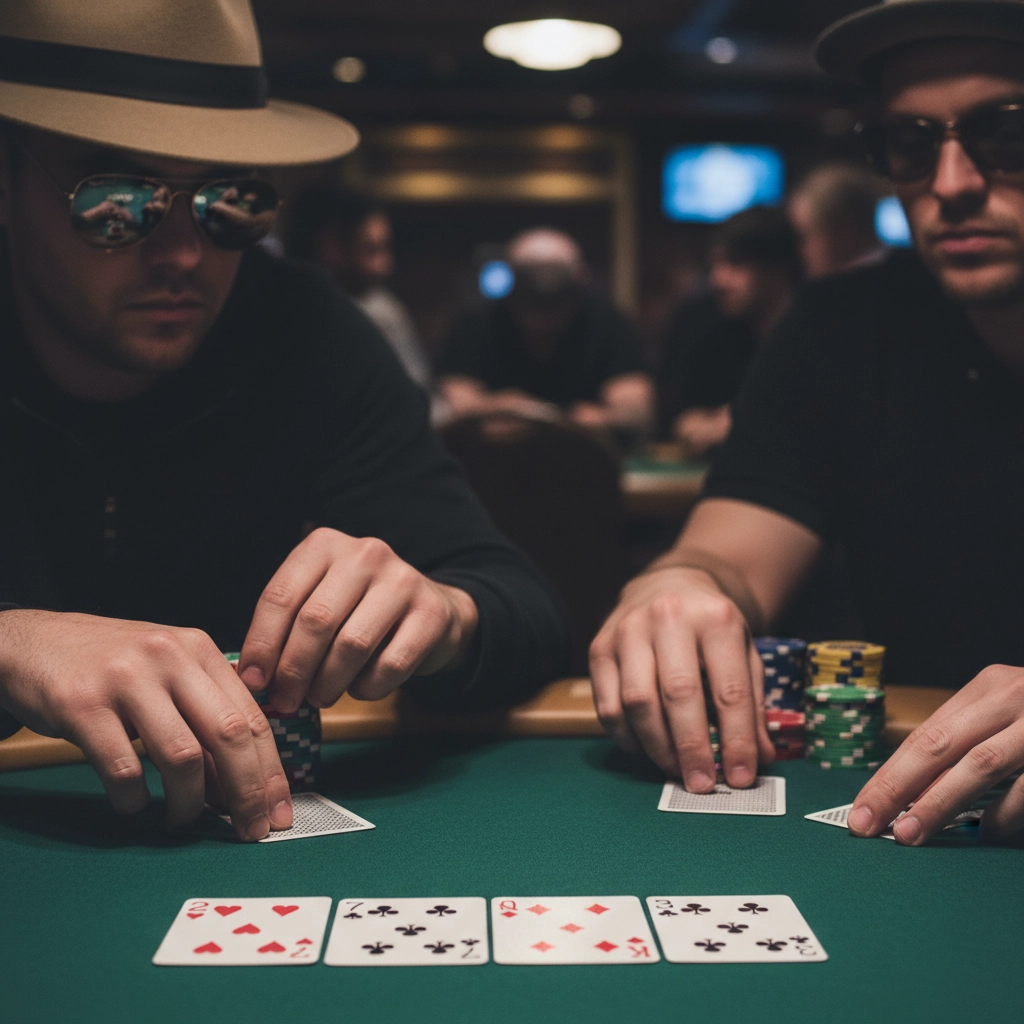
Boards are either “dry” (uncoordinated) or “wet” (draw-heavy). Dry boards — for example, K-7-2 rainbow — are easier to represent a made hand because there are fewer plausible draws. Wet boards like 9-8-7 with two hearts allow many drawing hands, so opponents are more likely to continue. Paired or monotone boards create unique dynamics; a paired board can be represented by trips but also blocks some two-pair combos, while monotone boards allow strong flush narratives.
Beyond broad categories, use blockers: holding an ace or suited ace-higher card reduces the frequency an opponent has the top pair or nut flush, improving your bluff success rate. Also adjust bet size by texture — larger bets on wet boards increase fold equity, since you price out drawing odds; on dry boards, smaller bets can be sufficient to fold medium-strength hands.
With these fundamentals of opponent profiling and board reading established, you’re ready to learn concrete bluff lines, exact bet sizing, and street-by-street decisions in the next section.

Concrete bluff lines: c-bets, double-barrels, and timing
Start with simple, structurally sound lines before adding theatrics. The most common bluff sequence is a continuation bet on the flop, a double-barrel on the turn if circumstances improve, and a river fold or shove depending on fold equity. Use these rules of thumb:
- C-bet when your preflop range is perceived to contain the kind of hands you’re representing. If you raised from late position and the flop favors a high-card range (K-Q-J type), a c-bet is often credible.
- If the flop is called, only double-barrel when the turn either (a) makes your story stronger (adds a plausible made hand), (b) removes many of the opponent’s draws, or (c) gives you a strong blocker to the nuts. Don’t barrel blindly into coordinated turn cards.
- On the river, convert to a polarized bluff (representing a nut or near-nut) only when you believe your opponent’s calling range contains many medium-strength hands and you hold relevant blockers. Otherwise, consider checking behind and conceding the bluff attempt.
Example: You raise from the cutoff with A♠10♣, get called by the button. Flop K♦7♣2♠ (rainbow) — small c-bet works because you credibly represent a Kx and there are few draws. If called and the turn is 4♦, a second barrel is weaker unless you have an ace blocker; if you do, the turn may fold out medium pairs and missed draws. If the turn brings a heart and you lack a heart blocker, re-evaluate—your story is less believable.
Bet sizing that shapes fold equity and tells a believable story
Bet sizing is your poker grammar. Small bets and large bets communicate different things; use size to control ranges and leverage blockers.
- Flop sizing: On dry boards, smaller c-bets (25–40% pot) are often enough to fold out Kx or medium pairs. On wet, coordinated boards, use larger bets (50–75% pot) to price out draws and make calling less attractive.
- Turn sizing: If you’re representing a made hand, increase to 60–100% of the pot to close the door on turn draws. If you’re semi-bluffing (you have some equity), choose a size that preserves fold equity while not committing your stack unnecessarily.
- River sizing and polarization: Bluffs should be polarized—very small bets look like thin value; very large bets suggest absolute strength. A polarized river bluff (70–120% pot, or shove when appropriate) maximizes fold equity but requires strong story and blockers.
- Stack-awareness: Deep stacks let you use multi-street bluffs; short stacks often force shove-or-fold. Adjust sizes so that the implied odds and pot odds align with the fold rates you need.
Street-by-street decision tree: a practical checklist
Use a quick checklist at each street to decide whether to continue the bluff:
- Flop: Does the board allow me to credibly hold a strong made hand? Is my opponent likely to fold given their range? If yes, bet.
- Turn: Did the turn improve my story or remove equity from my opponent’s range (e.g., completes draws)? If yes, consider a second barrel at a size that pressures marginal hands; if not, check and reassess.
- River: Do I hold a blocker to the hands that would call a bluff? Would my bet line up with the hands I’m representing? If fold equity is insufficient, show down or check—don’t bluff because you “have to.”
Run this mental model rapidly during play. Over time you’ll internalize which textures and opponents are worth investing multi-street bluffs in and which require folding. Practice disciplined sizing and always tie your bet to a believable story—bluffing without narrative is guessing, not strategy.
Closing Notes
Bluffing is a skill that grows with deliberate practice, honest hand review, and attention to the small cues at the table. Treat each bluff attempt as an experiment: record the hand, note why you chose the line, and review how your opponent reacted. Over time the guesses become models, and the models become reliable instincts.
- Practice drills: review missed fold equity opportunities, run simulations with equity software, and replay hands to test different bet sizes.
- Table selection: pick games and opponents where fold equity exists; the same bluff that works at one table will fail at another.
- Continuous learning: use articles, training sites, and hand histories to refine judgement—start with resources like Upswing Poker for structured exercises and theory if you want guided drills.
Be patient, keep your sizing and stories consistent, and let the math and reads guide you rather than impulse. Successful bluffing is less about deception and more about credible storytelling, risk control, and disciplined execution.
Frequently Asked Questions
How can I tell if an opponent is a “calling station” and avoid bluffing them?
Look for consistent signs: frequent calls across streets, minimal fold frequency in previous hands, wide defenses preflop, and a tendency to chase draws. If a player shows up with many marginal hands at showdown or rarely folds to large bets, reduce bluff attempts and switch to value-heavy lines.
What exactly are “blockers” and why do they matter when bluffing?
Blockers are cards in your hand that make it less likely your opponent holds certain strong hands (for example, holding the Ace of hearts reduces the chance they have the nut flush). They improve bluff success because they lower the probability your opponent has the exact combo you’re representing, making a polarizing river bluff more credible.
How should I size continuation bets differently on wet versus dry boards?
On dry boards use smaller c-bets (roughly 25–40% pot) to fold out one-pair hands and control the pot. On wet or coordinated boards increase sizing (50–75% pot) to price out draws and force tougher decisions. Adjust further based on opponent tendencies and stack depths.