
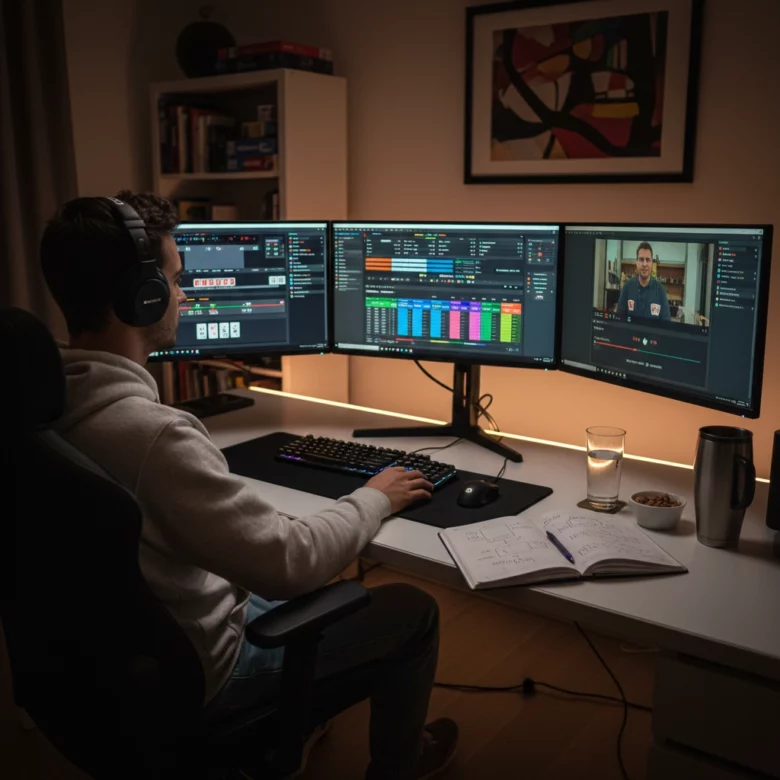
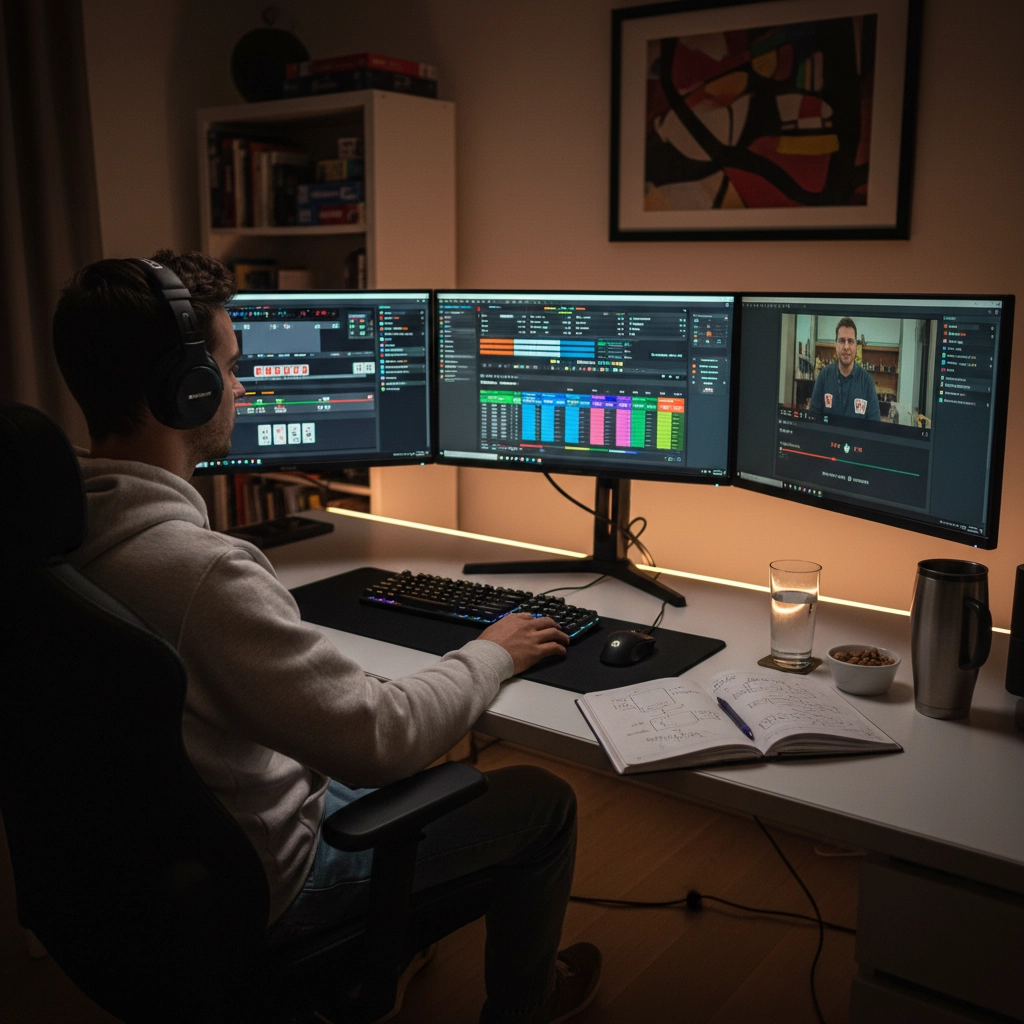
Why focused, timeboxed study outperforms endless database scrolling
If you play online poker, it’s easy to let study bleed into passive tasks—endless hand histories, forum browsing, or jumping between HUD stats without a plan. Focused sessions force you to study with intention, convert confusing data into actionable adjustments, and protect your mental energy for both learning and live play. When you design compact, goal-driven sessions you’ll retain more, avoid analysis paralysis, and actually implement improvements at the tables.
You’ll get better results if each study block has one clear outcome: learn a concept, fix a leak, or test a strategy. That clarity makes your study measurable and repeatable.
How to design a focused poker study session that fits your schedule
Set a single, specific objective
Decide what success looks like before you open any software. Objectives should be narrow and testable, for example:
- “Identify 10 common river spots where I’m folding too often at 25NL”
- “Drill 50 preflop 3-bet ranges vs. late position”
- “Watch one training video on multiway SPR decisions and summarize three takeaways”
Use a notebook or digital notes to record the objective and the metric you’ll use to judge progress.
Choose the right materials and tools
Pick 1–2 high-quality resources for the session. Mixing too many sources dilutes focus. Typical pairings that work well:
- Solver or GTO software + a short set of hands to review that illustrate the concept
- Hand history review with your database filter (e.g., spots where you lost > 5bb) + written action plan
- Training site video (10–20 minutes) + immediate application on a grouping of hands
Limit tool switching: if you start in PIOsolver or Equilab, finish your analysis there or record exactly where you’ll pick up next time.
Timebox sessions and include active learning
Keep sessions short—45–90 minutes is ideal. Within that block, alternate focused analysis with active tasks:
- 15–25 minutes: deep analysis (solver, hand review, or video)
- 5–10 minutes: write a 1–3 sentence takeaway and an action item to implement
- Optional 10–20 minutes: drills (range exercises, solver-based spot drills, or practice hands)
Use a timer to stay honest. The goal is concentrated attention, not marathon sessions that reduce retention.
With these building blocks—clear objective, limited resources, and strict timeboxing—you’ll create repeatable, efficient study habits that push your game forward. In the next section you’ll get a ready-to-use focused session template and examples for different stakes and formats so you can start applying this routine immediately.

Focused session template — ready to use
Objective: write a single sentence that defines success for this session (e.g., “Reduce 3-bet calling mistakes vs. BTN opens in 6-max 25NL by identifying 5 leak hands”).
Tools: list the one or two tools you’ll use (e.g., PokerTracker filter + PIOsolver spot file).
Timebox (60–75 minutes total)
– 0–5 minutes: Setup. Open tools, load filters/solver trees, and paste your objective at the top of a note. Set a timer.
– 5–25 minutes: Targeted analysis. Review a focused set of hands or a solver tree that matches the objective. Keep notes on patterns—don’t stray into unrelated hands.
– 25–30 minutes: Immediate takeaways. Write 3 concise observations and the single action you’ll implement next session or at the tables (e.g., “3-bet sizing too small in multiway pots — increase to X% of pot in these spots”).
– 30–45 minutes: Active drill/application. Run 20–30 quick drills: preflop range quizzes, equity calculations, or solver-based decision prompts. Treat this like practice reps, not passive reading.
– 45–55 minutes: Create an implementation plan. Specify how you’ll apply the change during play (which stakes/sessions, how many hands, what to track).
– 55–60/75 minutes: Quick review and log. Record the metric you’ll measure (e.g., fold frequency, EV per 100 hands) and schedule a follow-up session to re-check.
Session rules
– One objective only. If you finish early, either expand the same objective or stop.
– Preserve context. Save the exact solver state or hand filter so the next session resumes seamlessly.
– Limit tool switching. If you switch tools, note why and where you’ll continue.
Examples: focused sessions for common online formats and stakes
Example A — 25NL 6-max cash (60 minutes)
– Objective: “Identify 10 river spots where I over-fold to shove/bet and formulate a counteraction.”
– Tools: PT4 filter (river losses >3bb), small PIO solver for 3–4 representative hands.
– Drill: Run 30 targeted equity/line quizzes on river shove vs. call decisions. Implement one adjusted river line next 2 sessions and track winning rate in those spots.
Example B — 2/5 mid-stakes cash (75 minutes)
– Objective: “Refine 3-bet vs. CO BTN dynamics — tighten or polarize depending on postflop SPR.”
– Tools: Range chart, solver trees for SPR 1.5–4, 50 hand review (recent sessions).
– Drill: 20 solver prompts focused on SPR 2–3 multiway scenarios. Action: change 3-bet sizing or add a polarized 3-bet range; log results for 500 hands.
Example C — Online MTTs (50 minutes)
– Objective: “Improve short-stack shove/fold accuracy in late stages (20–30bb).”
– Tools: ICMIZER or simple shove/fold equity chart, 30 short-stack hands from recent tournaments.
– Drill: 40 shove/fold scenario calculations. Action: produce a one-page cheat sheet for common stacks/positions to reference during play.
Example D — Zoom/SnG quick-hit (45 minutes)
– Objective: “Sharpen steal defense vs. frequent stealers.”
– Tools: HUD filter for steal frequency, leakfinder report.
– Drill: 15 rapid hand reviews + 15 range-defense drills. Action: adopt a defend % target vs. BTN opens for next 200 hands.

Track progress and iterate: simple metrics that actually change behavior
Choose 1–2 metrics tied to your objective (e.g., EV/100 in specific spots, fold-to-3bet %, showdown win rate vs. cold calls). Log before/after values and the number of hands observed. Review the same metric after 200–500 hands or after two focused sessions. If no improvement, revisit the original analysis—did you misidentify the leak, or is the implementation inconsistent? Iterate by narrowing the objective further or increasing drill intensity.
Next steps to make focused study stick
Turn the template into a habit: block regular, short sessions in your calendar, pick one objective per session, and commit to logging outcomes. Treat study like a training regimen — consistency beats intensity. If you need reference material or structured courses to support your sessions, explore reputable training resources and integrate just one into your routine rather than trying to learn from everything at once.
Keep the administrative friction low: save filters/solver states, use a single notes file, and schedule quick follow-ups to measure the metric you chose. Small, consistent changes compound; focused study is designed to make those changes systematic and repeatable.
Frequently Asked Questions
How many focused study sessions should I run per week?
A practical target is 3–5 short sessions (45–90 minutes) per week. Consistency matters more than total hours — frequent, timeboxed blocks help retention and implementation. Adjust frequency based on your available playtime and learning goals.
What if I don’t have access to a solver or paid training sites?
You can still run effective focused sessions using hand history reviews, equity calculators like Equilab (free), range charts, and structured quizzes. Emphasize narrow objectives, drill common spots, and create simple cheat sheets to implement at the tables.
How do I ensure I actually apply what I learn at the tables?
Write one clear action item at the end of each session and specify when and how you’ll test it (stakes, number of hands, metric to track). Use your HUD or a manual notebook to mark hands where you tried the change, then review those in the next focused session to confirm whether the adjustment stuck and improved results.