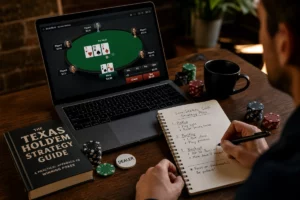
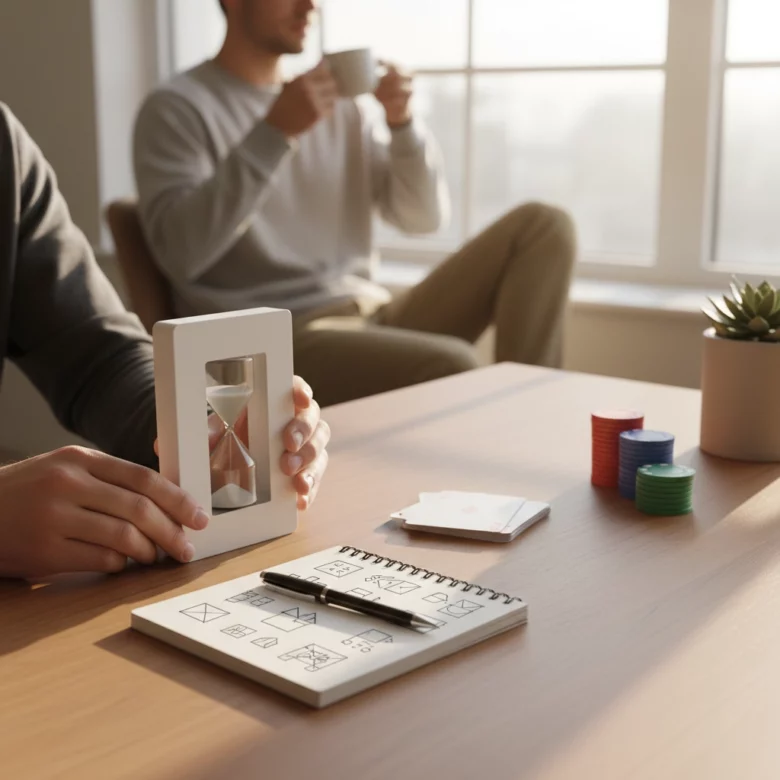

Why a 15-minute daily habit beats occasional marathon sessions
You already know that steady practice is how skill improves, but busy schedules make long study blocks unrealistic. Fifteen minutes every day, if structured well, produces better retention and clearer decision-making than sporadic multi-hour sessions. Short, consistent practice leverages spaced repetition, keeps concepts fresh before you forget them, and makes it easier to analyze hands with a calm, focused mind.
When you commit to a tiny, daily habit you eliminate the planning friction that kills study time: no scheduling marathon sessions, no overthinking what to study today. The key is discipline over duration — a compact routine that targets one concept at a time and includes immediate, measurable actions you can repeat.
How to structure a focused 15-minute poker study session
Your 15 minutes should feel like a sprint with a clear goal. Break the block into three parts: quick review, focused drill or study, and immediate application or logging. That structure ensures learning, practice, and accountability in every session.
- Minutes 0–3: Quick review — Open your study log and read one note from yesterday or a short chart (e.g., a hand range snapshot or a common flop texture). This primes your memory and prevents re-learning the same basics.
- Minutes 3–11: Focused drill — Pick a single micro-skill. Examples: sizing decisions on the turn, 3-bet defense vs late-position aggression, or shove/fold equity calculations. Use a solver spot-check, a focused training app drill, or run 5–8 quick hand examples through your mental checklist.
- Minutes 11–15: Apply and log — Translate the drill into a short note: what decision changed, what rule you’ll follow, and one hand to watch for in your next session. Add a simple performance metric (e.g., number of correct decisions out of 5 mock hands).
This format prevents overwhelm and ensures each session produces a concrete takeaway you can use at the tables the same day or the next time you play.
Choosing study topics that yield real ROI in limited time
Not all poker concepts are equally suited for 15-minute drills. Prioritize high-frequency, high-impact topics and rotate them across the week so you build depth without fatigue. Examples of effective micro-topics:
- Preflop ranges for common positions
- Continuation bet sizing on specific board textures
- ICM-ish endgame scratches for short-handed tournaments
- Short-run mental game cues: tilt triggers and quick reset routines
Keep reference materials and a short checklist accessible so you waste no time deciding what to study. With the structure above, each 15-minute session compounds into real skill gains.
Next, you’ll get a practical 4-week micro-study plan that maps daily 15-minute sessions to measurable improvement areas and includes simple tracking sheets to monitor progress.
4-week micro-study plan: daily themes you can finish in 15 minutes
Week 1 – Preflop foundation (focus: ranges and equity instincts)
– Day 1: Open/raise ranges from cutoff & button. Drill: review one range chart (0–3), mentally run 5 hands through range-checklist (3–11), log one adjustment and metric (percent of hands classified correctly out of 5) (11–15).
– Day 2: Defending vs steals from blinds. Drill: 5 defend/fold decisions with stack-size note. Metric: correct defense choices /5.
– Day 3: 3-bet sizing & range composition. Drill: pick 3 spot examples, decide sizing and value/blk ratio.
– Day 4: Cold-call vs isolation logic. Drill: 5 spots, pick action and reasoning.
– Day 5: Quick solver spot-check on one common hand (e.g., AJs vs CO 3-bet). Extract one rule.
– Day 6: Micro-review: redo two worst mistakes from the week, re-score them.
– Day 7: Rest or mental reset.
Week 2 – Flop and turn decisions (focus: CBets, textures, and turning ranges)
– Days 1–4: Daily micro-topics: cbet frequencies by texture, double-barrel evaluation, check-raise spots, checking back thin value. Each day: short chart or example (0–3), 5 mental hand-decisions (3–11), log rule + metric (11–15).
– Day 5: Two-solve comparisons: one exploitative tweak vs default strategy.
– Day 6: Review bad lines and practice 5 “what would I do?” hands.
– Day 7: Rest.
Week 3 – Endgame & stack-depth adjustments (focus: ICM, push/fold, SPR)
– Days 1–3: Short-stack shove/fold charts, bubble mathematics, and final table opens. Drill: 5 shove/fold scenarios.
– Day 4: Deep-stack postflop SPR drills for cash-game transitions.
– Day 5: Tournament-specific: bubble defense and steal ranges.
– Day 6: Review and simulate two tournament hands with final decision notes.
– Day 7: Rest.
Week 4 – Mental game, leaks, and mixed drills
– Days 1–2: Tilt triggers, short resets, breathing cue practice at the table.
– Day 3: Leak audit: identify one recurring mistake, run focused drills on it.
– Day 4: Mixed drill: one preflop, one postflop, one mental exercise.
– Day 5: Quick performance test: 10 mock decisions across topics; record score.
– Day 6: Comprehensive weekly review and set three focus goals for the next month.
– Day 7: Rest.
Follow the same 0–3/3–11/11–15 structure each day; small, repeatable tasks compound into big improvement.

Simple tracking and weekly review system that fits the 15-minute habit
Keep a one-line-per-session log (spreadsheet or notebook). Columns to include:
– Date
– Topic (e.g., “CO vs BTN 3-bet”)
– Drill type (solver/checklist/sim)
– Metric (e.g., 4/5 correct; average confidence 3/5)
– One-sentence takeaway
– Action for next session (what to practice again)
Weekly review (10–15 minutes on your review day)
– Scan metrics: flag items below your threshold (e.g., Adapting the plan by format: cash, MTT, and live vs online
– Cash games: prioritize deep-stack postflop work, SPR-based drills, and exploitative sizing practice. Increase solver spot-checks for multi-street lines. Metrics should track EV-improving decisions in deep-stack spots.
– MTTs/SNGs: emphasize ICM, shove/fold thresholds, bubble dynamics, and short-stack adjustments. Include more push/fold drills and endgame simulations.
– Live play: add quick reads and table-dynamics drills—practice one verbal/nonverbal cue reset and adaptability exercise per week. Log live-specific anecdotes to refine tell-reading rules.
– Online play: focus on multi-tabling efficiency, HUD-based exploit drills, and faster decision tests. Track tilt triggers tied to session length or bad beats.
Small tweaks in emphasis keep the same 15-minute structure effective across formats—change the topic list, not the habit.
Make the habit your competitive edge
Micro-practice isn’t a shortcut — it’s a strategy. Small, consistent investments in focused study change how you see spots, react under pressure, and recover from mistakes. Treat each 15-minute session as a deliberate experiment: test one adjustment, measure it, and iterate. Over weeks, those tiny improvements become automatic tendencies that save chips and wins at the table.
Start with a two-week commitment, keep the log simple, and protect the time like any other training appointment. If you want more drill ideas, training formats, or solver spot-checks to plug into your 15-minute blocks, check resources such as Run It Once for structured exercises and short-format lessons.
Finally, be patient with progress. The goal is not overnight transformation but steady, measurable upward movement. Make the habit small enough you can’t say no — and big enough to matter when it compounds.

Frequently Asked Questions
Can 15 minutes a day actually move my winrate or tournament results?
Yes — if the time is focused, consistent, and tracked. Fifteen minutes of deliberate practice on high-frequency decisions or recurring leaks compounds through better in-game choices and fewer repeated mistakes. The key is repetition on specific micro-skills, not vague studying.
What should I do if I miss several days in a row?
Don’t panic. Restart by scheduling two consecutive 15-minute catch-up sessions: one to review recent notes and one to resume the planned drill. Reset expectations, adjust your weekly goals, and aim for a short streak (3–7 days) to rebuild the habit rather than trying to overcompensate with long sessions.
How do I choose the right micro-topic each day?
Prioritize high-frequency, high-impact spots you face most often (preflop ranges, c-bet decisions, shove/fold thresholds, or your recurring leak). Rotate themes weekly to avoid burnout and use your tracking log to direct reps toward areas scoring below your threshold (for example,
Quick session scripts and templates
Scripts remove choice friction: when you know exactly what to do, your 15 minutes stays productive. Below are ready-to-use templates you can copy into your log so every session starts immediately.
Script A — Preflop focus (15 minutes)
- 0–3: Open your range chart for the target position and highlight one opening or defending line to compare against your default play.
- 3–11: Run five concrete hands: note position, stacks, villain type, and choose action. Use a simple checklist: equity? blockers? fold equity?
- 11–15: Log: metric (correct decisions 0–5), one sentence takeaway, and the exact wording of the rule you’ll apply next time.
Script B — Postflop texture drill (15 minutes)
- 0–3: Pull one board texture chart or a solver snapshot for the texture you see most often.
- 3–11: Evaluate five flop/turn decisions: should you c-bet, check-call, or check-fold? Note frequency and reasoning.
- 11–15: Record the rule (e.g., “don’t c-bet dry Ks-7x as IP vs passive BB”) and pick one real table hand to observe next session.
Common pitfalls and quick fixes
- Overcomplicating drills: Fix — narrow the question. Replace “study ranges” with “classify 5 hands as open/fold/3-bet.”
- Skipping the log: Fix — use a voice memo if typing kills momentum; transcribe once a week into the log.
- Using the solver as a crutch: Fix — treat solver output as a hypothesis; force yourself to explain the reasoning in one sentence before checking.
- Inconsistent metrics: Fix — pick one simple threshold (e.g., 80% correct) and stick with it for a month so you can spot real change.
- Burnout from too many topics: Fix — reduce variety: 3 days preflop, 3 days postflop, 1 rest per week.
Tools that speed a 15-minute habit
Use minimal tooling that accelerates action: a lightweight spreadsheet or note app with templates, a short-hand checklist, a solver spot-check tool or training app, a 15-minute timer, and voice memo for fast logging. Configure folders or saved searches so the exact chart or hand history is one tap away — that saves precious seconds and keeps the habit friction-free.