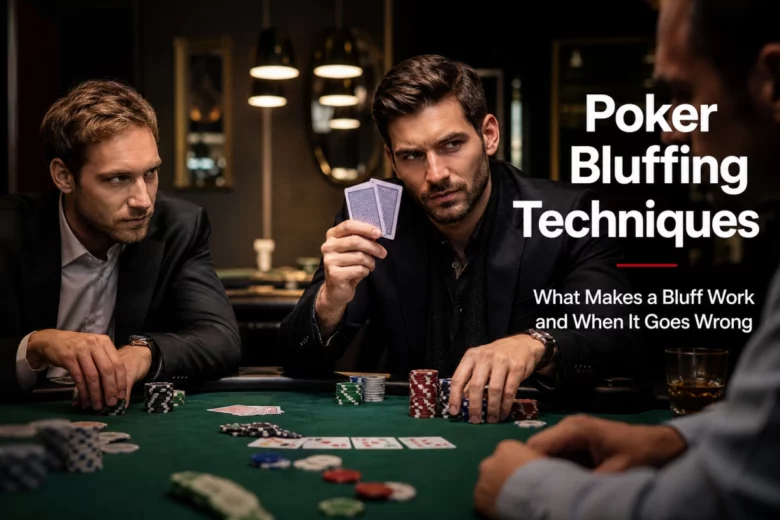
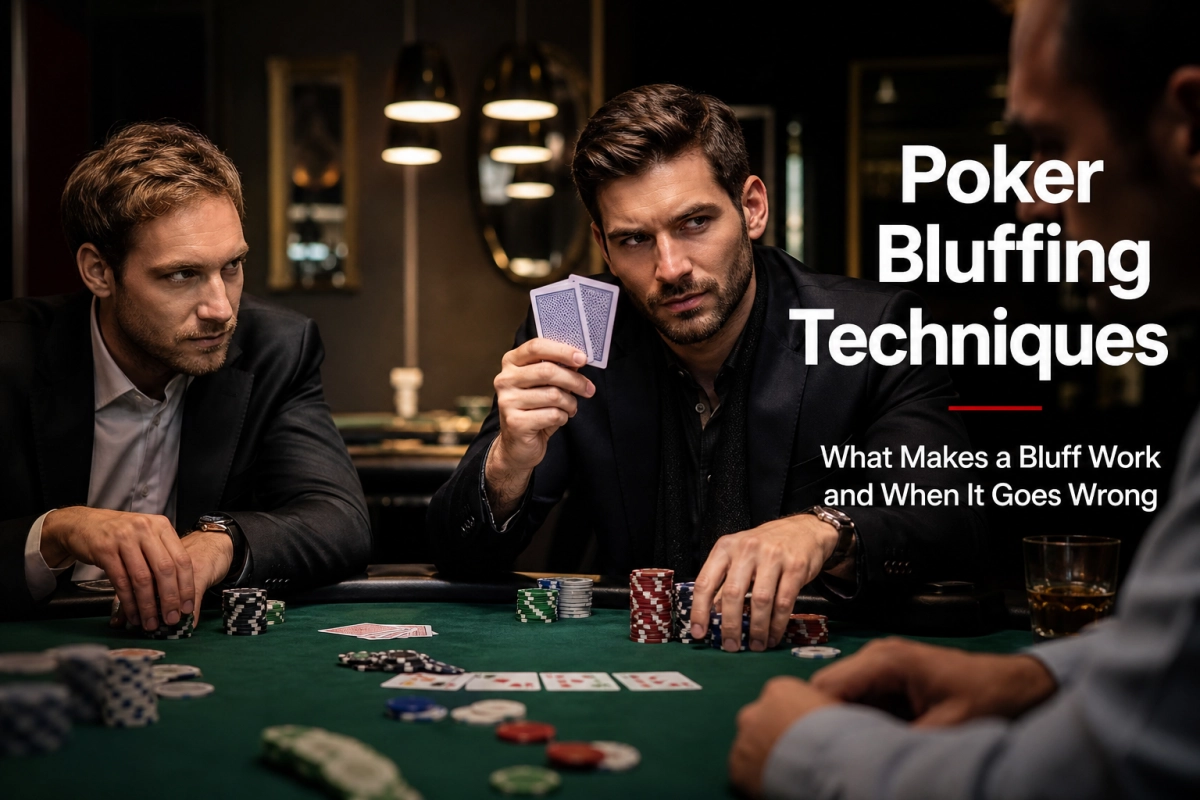
Why Bluffing Is a Skill, Not a Gamble
Bluffing is one of the most misunderstood aspects of poker. Many beginners treat it as a bold, spontaneous move — something you do when the moment feels right. In reality, effective poker bluffing techniques are built on logic, timing, and a clear understanding of how your opponent is likely to respond. A bluff that works is not lucky. It is calculated.
At its core, a bluff is a bet or raise made with a hand unlikely to win at showdown. The goal is not to hit a lucky card on the river — it is to make your opponent fold a better hand before the cards are ever revealed. That distinction shifts the focus away from your own cards and toward your opponent’s decision-making process. You are not trying to fake confidence. You are trying to present a problem your opponent cannot profitably solve.
The Conditions That Make a Bluff Profitable
Not every situation suits a bluff. The profitability of any bluff depends on a straightforward principle: your opponent must fold often enough that those folds compensate for the times they call and you lose the pot. If your opponent calls more often than they fold, the bluff will cost you money over time, regardless of how convincing it felt.
Several conditions improve the chances of success. First, position matters significantly. Bluffing from late position — the button or cutoff — gives you the advantage of acting after your opponents on every postflop street. You have already seen how they responded to the flop and turn before deciding whether to apply further pressure.
Second, board texture plays a major role. A coordinated board with flush draws and straight possibilities often favours the aggressive player, especially when the community cards align with the range of hands your position would realistically represent. This range advantage means your bluffs carry more credibility on certain boards than others.
Third, your table image influences how a bluff lands. A player who has seen you make disciplined, value-heavy decisions is far more likely to give you credit for a strong hand than one who has watched you overbet repeatedly with nothing. Bluffing works best when your overall story at the table is coherent.
The Role of Fold Equity in Bluff Selection
Fold equity is the likelihood that a bet will cause your opponent to fold. It shifts based on bet sizing, the street, your opponent’s tendencies, and the hand narrative. Recognising the difference between strong and weak fold equity separates disciplined bluffing from reckless aggression. Beginners often overestimate it because they focus on their own hand rather than their opponent’s likely holding and motivation to continue. A player already invested heavily in the pot, or holding a strong draw, is far less likely to fold than one holding a marginal made hand with little room to improve.
How to Size a Bluff Bet Convincingly
Bet sizing is where many well-constructed bluffs fall apart. A player can identify the right moment, choose the right board, and select the right opponent — then undermine all of it with a size that sends the wrong signal. Sizing is a statement about what hand you are representing, and your opponent is reading that statement whether they realise it or not.
The general principle is that bluff bets should mirror the sizing you would use for value in the same spot. If you routinely bet two-thirds of the pot with strong hands on the river, a sudden overbet when bluffing will look out of place to any attentive opponent. Consistency across both value hands and bluffs keeps your range balanced and your intentions opaque.
That said, certain situations call for larger sizing deliberately. On the river, when your opponent faces a pure call-or-fold decision, a large bet — approaching or exceeding pot size — applies maximum pressure on medium-strength hands. The logic is clear: the bigger the bet relative to the pot, the fewer times your opponent needs to fold for the bluff to break even. A pot-sized river bluff only needs to succeed just over half the time, which is achievable against opponents holding marginal hands with no strong reason to call.
Balancing Bluff Frequency Against Value
Skilled opponents pay attention to patterns. If you bet the river frequently without strong hands, regulars will call you down more liberally. If you never bluff, they will fold too easily and you leave money on the table. Sustainable bluffing means maintaining a ratio of bluffs to value bets that keeps opponents genuinely uncertain.
Think of this through the lens of a balanced betting range. The proportion of bluffs in your range should roughly correspond to the pot odds you are offering your opponent. If you bet pot-sized, you are offering two-to-one odds, meaning your opponent needs to win one in three times to break even. Your range must contain enough strong hands to make calling unprofitable — bluffs make up the remainder, built from real missed hands rather than hopeful stabs.
Situational Factors That Separate Effective Bluffs from Costly Mistakes
Even a technically sound bluff can fail when the situational context is wrong. Stack depth is one of the most important variables. In deep-stacked games, multi-street bluffs that build a convincing narrative tend to be more effective. In short-stacked situations — common in tournaments — fold equity diminishes sharply because opponents are often pot-committed and calling becomes almost automatic.
The number of opponents in the hand is equally important. Each additional player represents another decision-maker who must fold for the bluff to succeed. As a working principle, bluffing is most effective heads-up, moderately viable in three-way pots under the right conditions, and rarely advisable against four or more players without a strong semi-bluff component.
Reading Your Opponent Before You Bluff
Perhaps the most overlooked factor is opponent-specific tendencies. Theory can tell you when a bluff is mathematically justified, but the player across from you may not behave according to theory. Some opponents are calling stations by temperament — they struggle to fold marginal hands and take pride in catching bluffs. Against these players, bluffing is expensive regardless of timing. The correct adjustment is to recognise that your best path to profit against them runs through value betting, not deception.
Other opponents are highly risk-averse and fold to pressure far more readily than the math suggests they should. Against these players, bluffing opportunities are more frequent and more forgiving, particularly on later streets when the pot is meaningful and folding carries a real cost. The discipline lies in identifying which type you are facing before committing chips, rather than discovering the answer the expensive way at showdown.
Turning Bluffing Into a Deliberate Weapon
Everything here points toward a single truth: bluffing is most powerful when it is the product of deliberate thinking rather than instinct. The players who bluff profitably over the long run are not the ones who bluff most often or most boldly. They are the ones who ask the right questions before committing a single chip — about position, board texture, opponent tendencies, stack depth, and whether the story their betting line tells is one their opponent can actually believe.
The mechanics covered here — fold equity, bet sizing consistency, range balance, opponent profiling, stack awareness — are not separate tools so much as interconnected considerations feeding into a single decision. When they align, a bluff is not a gamble. It is a well-reasoned investment with a calculable expectation. When they do not align, the strongest discipline you can show is simply choosing not to pull the trigger.
Effective bluffing, at its highest level, is less about deception and more about precision. It requires clear thinking under pressure, emotional detachment from individual outcomes, and trust in the logic of your decisions over the noise of results. That is what separates the players who bluff well from those who merely bluff often — and it is the standard worth building toward with every hand you play.