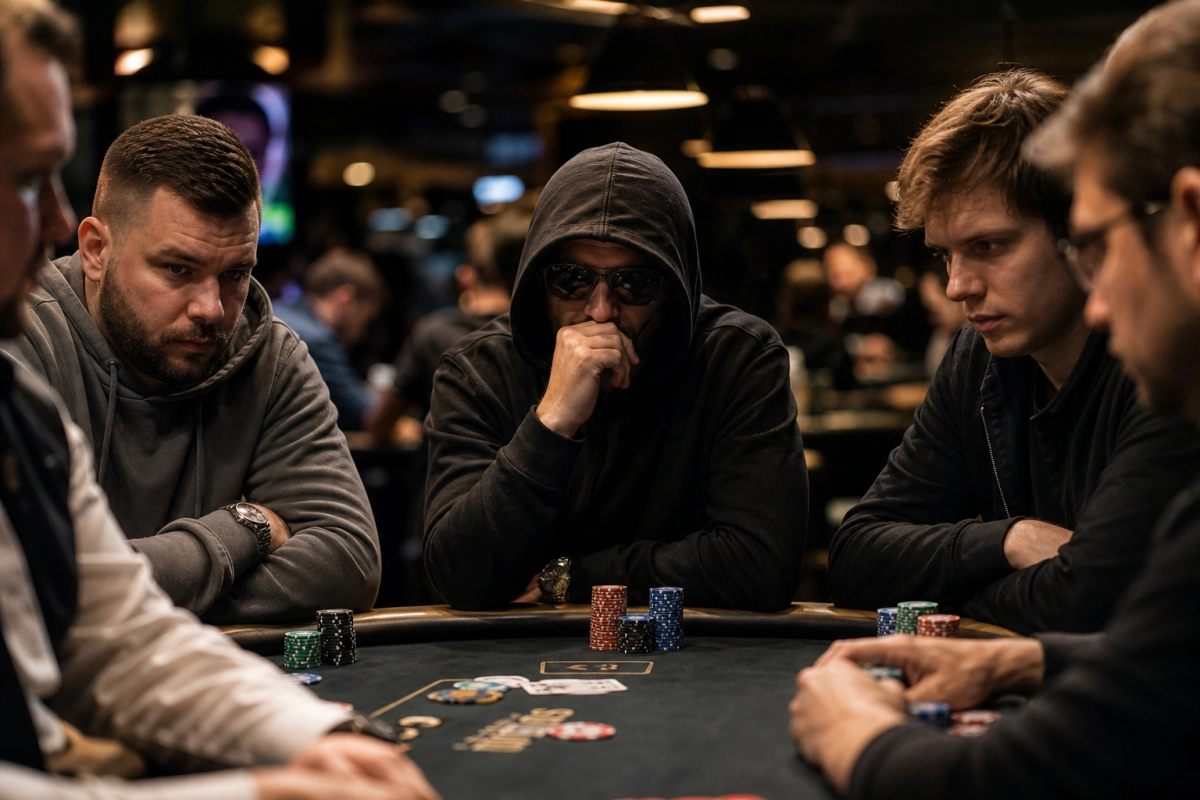
What Poker Tells Actually Are and Why They Matter at the Live Table
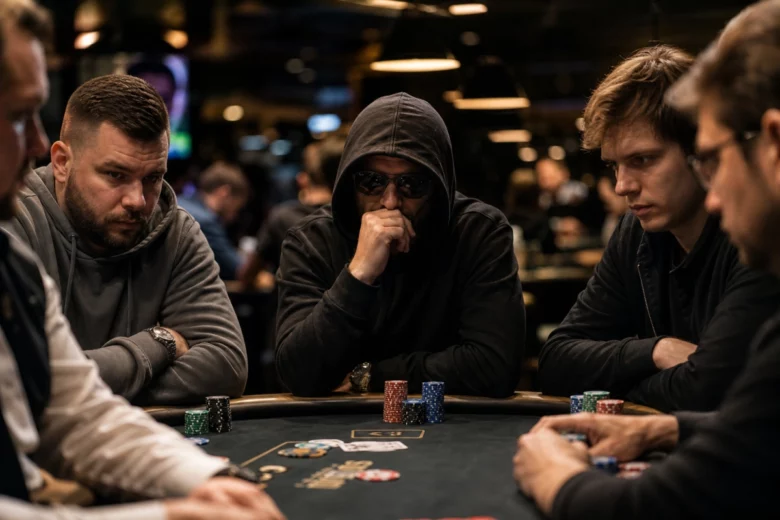
Live poker offers something no online game can replicate: the ability to observe another person in real time. Every player at the table constantly broadcasts information, often without realising it. These involuntary or habitual signals are known as poker tells, and reading them accurately is one of the most nuanced skills a live player can develop.
A tell is any observable behaviour, physical reaction, or verbal pattern that provides useful information about an opponent’s hand strength. It might be a slight hesitation before betting, a microexpression, or the confident way chips are pushed into the pot. None of these signals are reliable in isolation, and experienced players can disguise or deliberately manufacture them. Poker tells are clues, not confessions. They inform judgment rather than replace it.
The value of observation lies in building a picture over time. A single gesture tells you little. A pattern repeated across multiple hands tells you considerably more.
Physical Reactions That Often Reveal Hand Strength
The body responds to stress and excitement before the conscious mind can intervene. When a player sees a flop that dramatically improves their hand, the nervous system reacts. When someone is bluffing under pressure, that situation often produces visible physiological responses.
One of the most commonly observed physical tells is a change in breathing. A player holding a very strong hand may breathe more shallowly or briefly hold their breath. A player who exhales visibly after placing a large bet may be releasing tension, suggesting relief rather than genuine confidence. These are tendencies, not certainties.
Hand tremors are another signal worth noting. Shaking hands at the poker table are frequently associated with excitement rather than nerves — a player with a monster hand betting through an adrenaline response. This tell is most common in recreational players, since experienced opponents have usually learned to manage their physical composure.
Posture shifts can also be informative. Many players unconsciously lean forward when holding a strong hand. Leaning back or appearing to disengage can signal discomfort or weakness, though confident players occasionally use relaxed body language to project false security.
Eye Contact and the Gaze Tell
The relationship between eye contact and hand strength is counterintuitive. A player who stares directly at an opponent after betting may be trying to appear threatening — which can suggest they do not want to be called. A player with a genuinely strong hand sometimes looks away, appearing disinterested, because they feel secure enough not to monitor the situation anxiously.
The direction of a player’s gaze immediately after community cards are revealed is also revealing. A player who quickly glances at their chip stack after seeing the flop may already be thinking about how to bet a significantly improved hand. This involuntary glance toward chips is a widely recognised signal among attentive live players.
Betting Gestures and Chip Handling as Behavioural Signatures
The way a player handles chips and physically executes a bet can communicate as much as any facial expression. Chip handling is particularly rich because it happens repeatedly, allowing you to establish a baseline and identify meaningful deviations.
Players who splash chips carelessly or push them forward with theatrical force are sometimes projecting strength they do not have. Paradoxically, performative betting motions are more commonly associated with weaker holdings. A player genuinely confident in their hand often bets with quiet, deliberate precision — sliding chips forward smoothly without theatrics.
A player who carefully counts out an exact bet and places it methodically tends to be genuinely deliberating. Compare that to someone who grabs a rough stack and tosses it forward — the impulsive gesture can reflect a decision made quickly, either because the hand requires no analysis or because the bluff was committed to before the action arrived.
String Betting Hesitations and False Starts
Watching how a player reaches for chips before action is officially on them can be particularly telling. A forward lean with hands moving toward the stack before their turn often signals genuine enthusiasm — strength. A player who picks up chips, pauses, and sets them back down may be navigating uncertainty or manufacturing the appearance of a difficult decision.
A long pause followed by a sudden committed push often follows theatrical hesitation designed to simulate weakness and encourage a call. Seasoned players recognise this as a classic false tell. The reverse — acting instantaneously — can indicate either a very strong hand requiring no thought or a bluff executed on autopilot to minimise exposure.
Verbal Cues and the Information Hidden in Casual Conversation
Table talk is one of the least studied but most revealing dimensions of live poker. Regardless of motivation, the content, timing, and tone of what someone says during a hand can carry significant informational weight.
Unsolicited commentary is a particularly useful signal. When a player voluntarily offers statements like “I’m probably beat here” or “I don’t know why I’m even in this hand,” treat them with scepticism. This kind of verbal self-deprecation is frequently used by players holding strong hands to invite action. A player who genuinely feels beaten tends to fold quietly rather than narrate their internal conflict.
The pitch and pace of speech can also shift under pressure. A normally talkative player who becomes noticeably quiet when facing a decision with a marginal hand, or a usually reserved player who suddenly becomes chatty after initiating a large bet, is worth paying attention to. Nervous energy finds outlets, and speech is one of the most common.
- A voice that rises slightly in pitch under tension can indicate genuine anxiety — more often associated with a bluff than the confidence of a made hand.
- Players who answer questions with specific, elaborately constructed explanations are more often bluffing than those who offer a brief, relaxed deflection.
- Laughter or joking immediately after a large bet can signal either genuine amusement from a player who has trapped an opponent, or nervous deflection from someone hoping a lighthearted tone discourages a call.
What unites all verbal tells is that authenticity tends to be economical. Players secure in their hand generally have little need to perform or persuade. The more words a player invests in shaping your perception, the more worth examining those words become — not for their literal meaning, but for what the impulse to speak reveals.
Building Your Own System for Reading Tells Over Time
The most important shift a live player can make is moving away from looking for tells in individual moments and toward building a comprehensive model of each opponent across an entire session. Tells derive their value from context. An isolated tremor or a single glance at the chip stack means almost nothing without a baseline of normal behaviour to compare it against.
Watching how an opponent behaves when relaxed, when folded, and in low-stakes situations gives you a reference point that makes deviations meaningful. When the same player who folds quietly suddenly volunteers an unprompted comment while pushing chips forward, that departure carries real weight. The deviation is the tell — not the behaviour itself.
Honest self-awareness also matters. Confirmation bias is a genuine risk: once you decide an opponent is bluffing, it becomes easy to interpret all subsequent signals as confirmation. The discipline required is to weigh each observation independently and update your assessment as new information emerges.
Accounting for Deliberate Deception and Reverse Tells
Experienced players know others are watching and some actively construct false images through manufactured tells — deliberately showing a trembling hand after winning a bluff, or sighing theatrically when strong. This layer of intentional misdirection is real, particularly against opponents who have clearly thought deeply about the game.
The practical response is calibration, not paranoia. Against recreational players, straightforward physical tells remain genuinely useful. Against skilled opponents, their value diminishes and the emphasis shifts back toward positional awareness, betting patterns, and hand analysis. Tells supplement strong technical poker — they do not replace it.
The Quiet Edge That Live Poker Rewards
Reading tells is ultimately an exercise in sustained attention. It asks you to remain present and observant even in hands where you have no cards to play, to build patient evidence-based assessments rather than reach for exciting conclusions, and to hold those assessments loosely — willing to revise them when new behaviour contradicts your model.
Done well, it does not feel like detective work. It feels like a deepening familiarity with the people across the table — an understanding of how they think, how pressure affects them, and where the seams in their composure tend to appear. That understanding, accumulated over hours at the felt, is one of the genuinely irreplaceable advantages that live poker offers to those willing to pay close enough attention to earn it.