


Why learning to bluff will improve your overall poker game
Bluffing isn’t an act of desperation — it’s a calculated weapon in your poker toolkit. When you understand when and how to bluff, you add leverage to strong hands, steal uncontested pots, and keep opponents guessing. You play fewer hands but win more pots, because your table decisions start to influence opponents’ perceptions and choices.
What bluffing actually accomplishes at the table
- Creates fold equity: You win pots without needing the best hand.
- Protects marginal hands: A well-timed bluff backs up thin value lines.
- Distorts opponents’ ranges: They must respect your bets and adjust.
- Maintains unpredictability: Prevents opponents from exploiting your strategy.
Foundations you must master before bluffing often
Before you attempt fancy bluffs, make sure the basics are in place. Bluffing without a plan gets punished by observant players. Focus on these foundations to make your bluffs believable and profitable.
Position: your primary advantage
You should prefer to bluff from late position. Acting after your opponents gives you extra information — their bet sizes, timing, and the texture of their actions. In position, you can control pot size and apply pressure when it matters most.
Table image and timing
Your recent actions shape how others see you. If you’ve been playing tight, a bluff has higher credibility. If you’ve been catching too many bluffs yourself, opponents will call you more often. Time your bluffs when you have a story that matches the recent sequence of hands and your perceived image.
Stack size and pot commitment
- Shallow stacks: Bluffing has less effect because opponents are pot-committed.
- Deep stacks: Effective bluffs can extract folds but require believable sizing.
- Avoid river bluffs when your bet size doesn’t put true pressure on an opponent’s pot commitment.
Reading opponents and betting patterns
Identify who is fold-prone, who calls down, and who adjusts. Prioritize bluffing against players who make straightforward, predictable folding decisions. Use their prior bet sizes and reaction times to craft a bet that fits the story you’re telling.
A simple bluff checklist you can run through at the table
- Do you have position?
- Does the board texture support your story?
- Is your table image tight enough to be believed?
- Is the opponent capable of folding given their stack size?
- Is your bet size consistent with strength you are representing?
With these fundamentals practiced, you’ll reduce costly mistakes and make your bluffs much more convincing. In the next section you’ll learn specific bluff types, step-by-step execution for each street, and how to use tells and timing to maximize success.
Types of bluffs and when to use each
Not all bluffs are created equal. Knowing which type to deploy in a given spot increases your success rate and limits costly mistakes. Here are the primary bluff categories and the situations that favor them.
- Semi-bluff — You have a hand that is not yet the best but can improve (e.g., a flush or straight draw). Use this on the flop or turn when you have additional outs. Semi-bluffs give you two ways to win: you fold out better hands now or you make your draw later.
- Pure bluff (river) — You have little to no showdown value and are representing a completed hand. Best executed against opponents who are capable of folding medium-strength hands and when the board and previous action tell a consistent story.
- Continuation bluff (c-bet) — You show aggression on the flop after being the preflop aggressor. Effective on dry boards or when opponents missed the texture. Size should be credible for the story you’re selling.
- Multi-street/pressure bluff — You carry the story across flop, turn, and river with escalating pressure. Works best when you have position, blockers, and a line that maps to the nuts for a villain’s perceived calling range.
- Blocking bet — A small bet made to control pot size and deny your opponent chances to bluff large later. Not a true bluff to win the pot now, but useful to shape the hand.
Two technical concepts to weave into your bluffing decisions:
- Blockers: Cards in your hand that reduce the likelihood an opponent holds the nuts (e.g., holding the Ace of spades when the board has high spade cards). Blockers make river bluffs more credible.
- Polarized vs merged betting: Polarized ranges (either very strong or pure bluffs) require larger sizing to be believable; merged ranges (betting medium hands and bluffs) use smaller sizes to avoid forcing stronger hands to fold incorrectly.

Bluffing by street: step-by-step execution
Successful bluffs follow a coherent narrative from preflop through river. Here’s a practical execution plan for each street.
- Preflop: Choose your bluffing candidates. Open-raises and 3-bets can set up c-bets and multi-street pressure. Prefer hands with blockers or fold equity (e.g., Ax, Kx, suited connectors).
- Flop: Decide: semi-bluff, c-bet to fold out draws, or check to re-evaluate. On dry flops (e.g., K-7-2 rainbow), size c-bets around 40–60% pot to make folds likely. On wet flops, prefer semi-bluffs with additional equity.
- Turn: Double-barrel when the turn card improves your story or further narrows opponents’ ranges. Increase sizing to 50–75% pot if you expect a fold. If raised, consider giving up unless you have strong blockers or outs.
- River: Make your final story believable. Large polarized bets (60–100% pot) work if you’re representing the nuts; smaller bets are for thinner value or mixed strategies. If the opponent checks to you, ask: “Will they fold?” If not, check and save chips.
Always plan your fold equity. If a raise on any street destroys your story and you have little equity, fold. A disciplined retreat preserves bankroll and allows better opportunities later.
Tells, timing and nonverbal cues that sell your bluff
Bluffing isn’t purely mathematical — presentation matters. Use timing and subtle behavior to reinforce your narrative, but beware of giving away too much.
- Timing: Quick, confident bets often read as weak online but can look natural live. Conversely, deliberate pauses can sell strength if consistent with your table image. Online, vary your bet timing to avoid predictability.
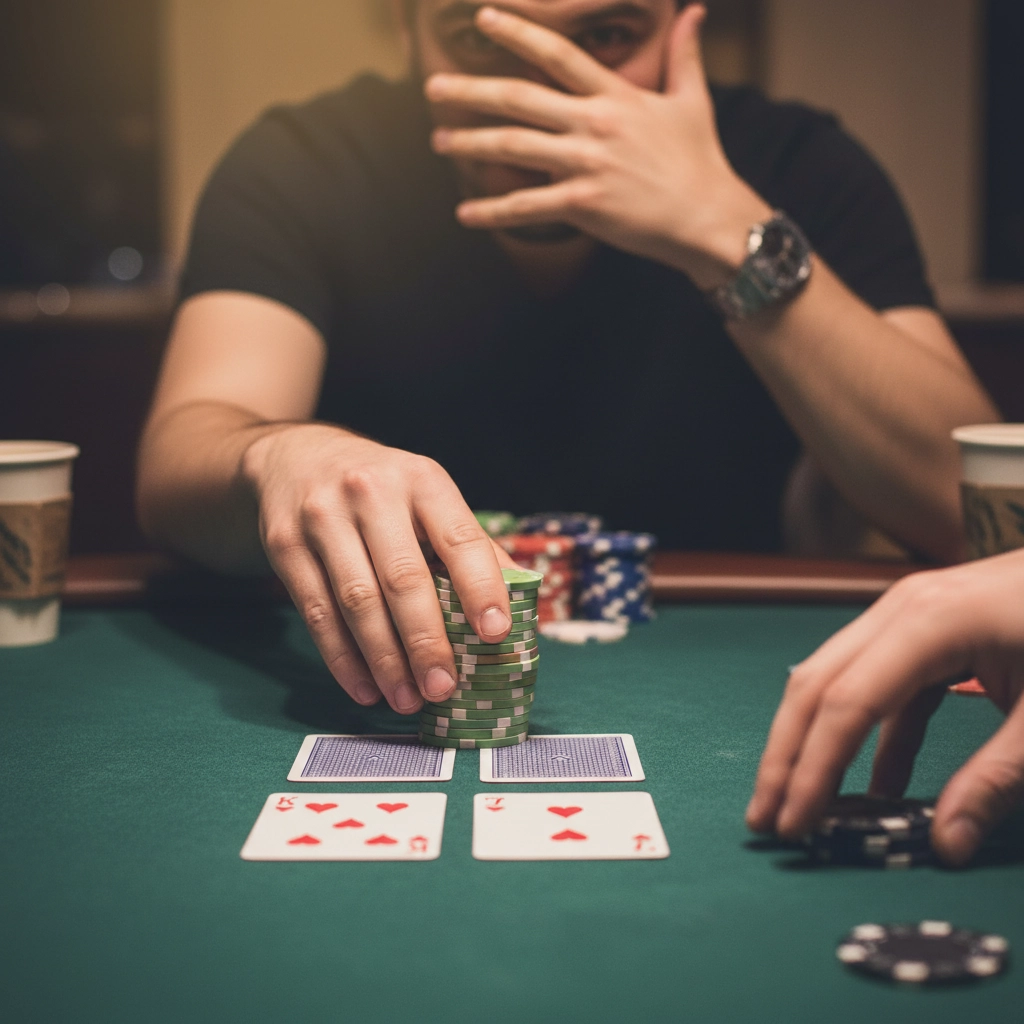
- Physical tells (live): Calm, routine motions when bluffing help. If you usually twitch with strong hands, reverse that pattern occasionally: appear relaxed when strong, controlled when bluffing. Don’t overact — exaggerated tells are easily read.
- Verbal and chat: Use table talk sparingly. Short, consistent phrases or silence are safer than trying to bait opponents verbally; many players use talk as a defense and won’t respond as intended.
- Consistency is key: Your line must match the story. A tiny river bet after big bets on earlier streets is suspicious. Keep sizing and actions that align with representing actual hands you could have.
Master the mechanics above, and your bluffs will not only win pots — they’ll shape opponents’ expectations, generating long-term edge at the table.
Practice drills and study routines
To put theory into profitable practice, build a focused routine that reinforces good habits and exposes leaks.
- Review hand histories after each session — flag bluffs that worked and those that failed, and note opponent types.
- Run targeted drills: practice continuation bets on dry boards, simulate multi-street bluffs, and practice folding to raises.
- Use tracking software or note-taking to measure fold equity outcomes (how often opponents fold to your bet sizes).
- Mix live and online practice: live play sharpens physical tells and timing; online play helps refine sizing and frequency.
- Set short goals: e.g., one disciplined river fold per session, or one successful multi-street bluff per set number of hands.
Sharpening your bluffing game
Bluffing is a skill learned through disciplined practice, honest hand review, and steady adaptation. Keep your ranges balanced, let position guide aggressive moves, and prioritize situations where blockers and stack dynamics give you real fold equity. Track your results, refine your timing, and study opponents — then iterate. For deeper drills and advanced exercises, consult a focused strategy resource like Upswing Poker to expand your toolbox and maintain momentum at the table.
Frequently Asked Questions
When should I avoid bluffing?
Avoid bluffing against players who call down with weak hands, when you’re out of position, or when their stack size makes them pot-committed. Also skip river bluffs if your bet size won’t credibly force a fold or if your line doesn’t match a believable strong hand.
How often should I bluff?
There’s no single frequency that fits every table. Bluff more selectively: prefer late position, opponents who fold, and spots with blockers or strong storylines. Balance is important—too few bluffs makes you exploitable; too many leads to losing showdowns.
Do blockers really matter for river bluffs?
Yes. Holding cards that remove combinations of the nuts (blockers) makes your bluff more credible because it reduces the likelihood the opponent holds the strong hands you’re representing. Use blockers to increase confidence in larger polarized river bets.